Industry · Payment Processing
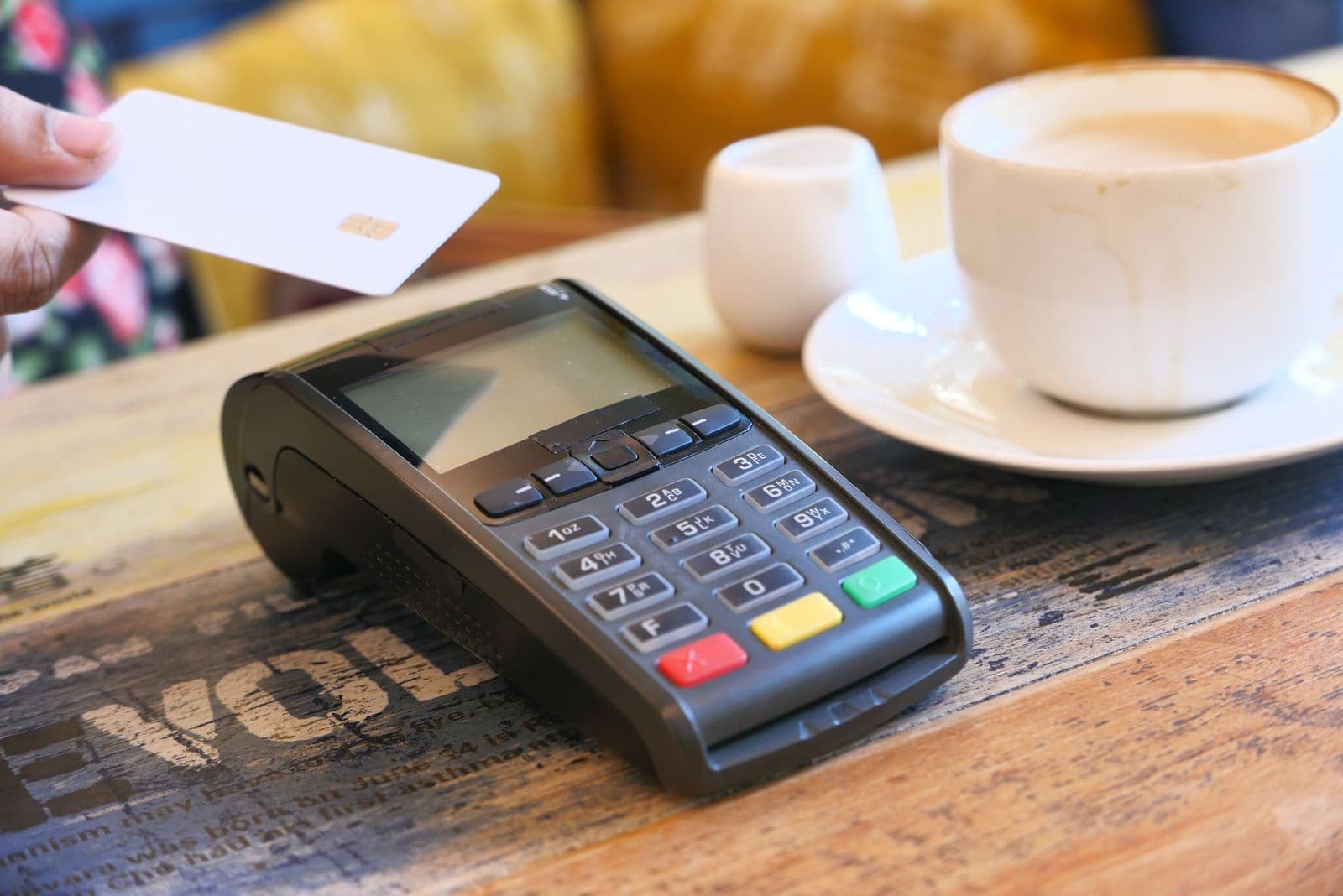
On 1 October 2026 the card surcharge disappears from Australian checkouts. The Reserve Bank's Payments System Board decided in March to lift its long-standing prohibition on 'no-surcharge' rules, and the three networks it regulates — eftpos, Mastercard and Visa — have each said they will impose one from that date. American Express, UnionPay and PayPal are not regulated but have chosen to follow. The RBA's own figures say 16% of Australian merchants surcharged in the 2024/25 financial year and charged around $1.8 billion doing it on the designated networks, of which the RBA estimates consumers are paying $1.6 billion. The same day, the cap on what a card issuer can collect in interchange on a domestic consumer credit card falls from 0.8% to 0.3%.
This piece is for the business on the other side of the terminal. It sets out what the RBA actually decided, what the exceptions are, what the acquirers the site has reviewed have told their merchants they are doing on 1 October, and what the published price of accepting a card in Australia is now, as of mid-September 2026. Rates quoted are the providers' own published Australian prices and include GST where the provider says so.
The Conclusions Paper published on 31 March 2026 has three parts, and they arrive on different dates. The surcharge removal and the domestic interchange caps take effect on 1 October 2026. On that day the debit and prepaid interchange cap falls from 10 cents or 0.2% to 8 cents or 0.16% of the transaction, aligning the cap with the existing 8-cent benchmark, and the consumer credit cap falls from 0.8% to 0.3%, with the old 0.5% weighted-average benchmark abolished. The commercial credit cap stays at 0.8%, which the RBA says is deliberate: keeping it separate lets smaller commercial-card issuers keep competing with the large issuers and with American Express, whose interchange the RBA does not regulate.
The transparency rules come next. From 30 October 2026 the designated card networks must publish quarterly aggregate data on scheme fees, rebates and interchange, split by domestic and international, debit and credit, card-present and card-not-present, with tokenised transactions shown separately. Acquirers processing more than $10 billion a year in card payments must publish their merchant service fees quarterly, broken down by card type, card origin, merchant size and, for domestic cards, in-store versus online. Those large acquirers must also publish, for the first four quarters from 1 October 2026, a measure of pass-through: the change in their average merchant fee divided by the change in their average interchange cost. The first of those reports is due on 30 January 2027, and the RBA will republish them so that an acquirer that kept the saving is visible.
The last part lands on 1 April 2027. Interchange on foreign-issued cards acquired in Australia, which is unregulated today, is capped at 1.0% of the transaction across debit, prepaid and credit, in-store and online. From the same date every acquirer must itemise merchant statements by domestic versus foreign card, debit versus credit and card-present versus card-not-present, which the RBA says is so a merchant can take the statement to a competitor and get an accurate quote. The RBA puts the merchant saving from the interchange changes, domestic and foreign together, at around $910 million a year, and acquirers' and payment providers' own estimate of the cost of removing surcharging at around $25 million.
Australia has allowed surcharging since 1 January 2003, when an RBA standard forced Mastercard and Visa to drop their no-surcharge rules on credit cards, on the theory that a visible price signal would push consumers towards cheaper payment methods. The RBA's media release says the framework 'is no longer achieving its intended purpose', and the Conclusions Paper gives its reasons in numbers. Cash fell from 69% of in-person transactions in 2007 to around 15% in 2025, so there is no cheap alternative left to steer people towards. Only about 5% of merchants surcharge debit and credit differently, which means the surcharge is not signalling the cost difference between them. A large majority of consumers told the RBA they were notified of a surcharge only sometimes or rarely before paying, and around 2,500 reports about surcharging and add-on costs — consumer complaints and queries, and merchants asking about their obligations — reached the ACCC in the 18 months to June 2024. Three-quarters of surveyed consumers thought surcharging should stop.
The paper is candid that removal costs some merchants money. It acknowledges submissions warning that low-margin businesses could be squeezed, and it estimates the aggregate effect on consumer prices at around 0.1% if every surcharge were folded into sticker prices. It also notes that most businesses already price that way: 85% of small merchants and 89% of large ones do not surcharge and are unaffected by this half of the reform. The contingency plan is stated plainly. If surcharging continues after the prohibition on no-surcharge rules is lifted, the RBA could recommend that the Government legislate a ban.
The rule is about charges for paying by card, and only those. The RBA's FAQ lists what is unaffected: a weekend or public holiday surcharge in hospitality, a booking fee, and the fees your payment provider charges you for terminal rental or transaction processing. A minimum card spend can stay, as long as card payments under it are declined rather than charged a fee. What you cannot do is keep the surcharge and rename it. The ACCC's guidance says the card networks and payment service providers, not the ACCC, enforce the no-surcharge rules, but that a business describing a card payment surcharge as another type of fee or charge 'may be engaging in misleading conduct' under consumer law, which the ACCC does enforce. The rule follows the payment date: a card payment made on or after 1 October cannot carry a surcharge even if the invoice went out in September.
Square has published a preparation guide for Australian sellers. Until 30 September card surcharging works as it does today; on 1 October Square 'will automatically disable the card surcharge setting on your account', and the surcharge line stops appearing at checkout and on receipts. The caveat is for sellers who built a surcharge some other way: 'If you created a card surcharge using a service charge, a sales tax or automatic tipping instead of using Square's card surcharge setting', Square cannot turn it off and you must remove it before taking a payment on 1 October. On price, Square says 'Nothing about Square's payment processing pricing changes on 1 October'. Its Australian rate is 1.6% for a tapped or inserted card, on Visa, Mastercard, eftpos, JCB and American Express alike, for sellers who signed up on or after 30 May 2024 — earlier accounts are on 1.9% — and 2.2% for card-not-present payments, which covers manually entered cards, Square Online, invoices and the virtual terminal. Square's fee page says it covers the dispute fee on every dispute it fights on your behalf.
Tyro's post of 10 April 2026 says it 'will automatically remove Tyro-managed surcharging on eftpos, Mastercard, Visa, and American Express transactions on 1 October 2026', and that 'in most cases, there is nothing you need to do on the terminal side'. The exception is a surcharge applied by an integrated POS system and sent to the terminal, which Tyro says you may need to review separately; merchants who want the setting gone earlier can remove it in the Tyro Merchant Portal. Tyro's published pricing is 1.3% including GST on its Pro Touch, Pro Key, Pro Lite and BYO-app products, with rental of $29 a month for Pro Touch and Pro Key, $19 for Pro Lite and nothing for the app on your own phone, a custom quote above $20,000 a month, and no lock-in, joining or break fees. It is running an introductory 1% rate until 31 March 2027 for new customers transacting more than $20,000 a month who join before 24 November 2026. On whether its standard rate will fall with interchange, Tyro's health-practice post says only that it will 'keep you updated as that picture becomes clearer'. One thing to ask Tyro about if it applies to you: its pricing page footnotes a 'No Cost EFTPOS' plan, and a plan in which the customer's surcharge funds the merchant's fees cannot work in its current form once the surcharge is gone.
Zeller's post of 7 September 2026 says 'we will automatically disable the card surcharge setting on your account from 1 October'. Its pricing is the simplest of the four: 1.4% including GST on every in-person card, American Express included, with the terminal bought outright — both the Terminal 1x and Terminal 2 were listed at $99 in September 2026, down from $199 — and no monthly rental or account fees. Invoices are 1.7% plus 25 cents on domestic cards, with a 1.1% promotional rate for new customers onboarding between 24 August and 31 October 2026, and the virtual terminal is 1.75% plus 25 cents. Zeller's post says nothing about its own rates moving with interchange.
Stripe's Australian pricing page lists 1.7% plus A$0.30 for domestic cards online and 1.7% plus A$0.10 through Stripe Terminal, 3.5% plus the same fixed fee for international cards, and A$25 for each dispute received. Both domestic figures carry a footnote reading 'Lower pricing from 1 Oct 2026', and the international figures one reading 'Lower pricing from 1 Apr 2027' — the two dates on which the domestic and foreign interchange caps take effect — but the page does not say what the new rates are. One Australian comparison site reports the notified figures as 1.65% from October and 2.8% on international cards from April; we could not find that in a Stripe publication and treat it as unconfirmed. Stripe's last Australian cut, on 1 April 2024, took domestic cards from 1.75% to 1.7% and was attributed to least-cost routing of debit.
PayPal is not a designated network, and the RBA's FAQ records that PayPal has nonetheless decided to remove surcharging, with its no-surcharge rule taking effect from 5 October 2026 rather than 1 October. American Express and UnionPay also remove surcharging from 1 October; CommBank's merchant page says JCB is doing the same. Of the banks, CommBank has been the most specific about price: its newsroom announced on 31 August that its single-rate in-store merchant fee falls from 1.10% to 0.99% including GST on 1 October, which it says is worth close to $1,000 a year to a café turning over $900,000, and that it will publish its first quarterly merchant fee report on 30 October and its first interchange pass-through report on 30 January 2027.
The RBA's competition chapter gives the benchmark. Small merchants on single-rate plans — one percentage for every card, which is what Square, Tyro and Zeller sell — paid an average of 1.4% of transaction value; small merchants on unblended plans, where each card type is priced separately, averaged 0.9%; large merchants averaged 0.6%. The paper's observation is that merchants on blended plans tend to pay more than similar-sized merchants on unblended ones. That is the gap the interchange cuts are meant to narrow: a small merchant's debit interchange was running about 0.13 percentage points above what a strategic merchant paid, and consumer credit interchange averaged 0.47% but ranged from strategic rates as low as 0.18% for the largest merchants up to the 0.8% cap for small ones.
Set against that benchmark, the published single rates are already under the average. Tyro's 1.3%, Zeller's 1.4% and Square's 1.6% in person are all fixed prices, which means the merchant does not see interchange move — the provider does. On a flat plan, the interchange cut is a margin gain for the acquirer until the acquirer chooses to cut the sticker price, which is exactly what the pass-through report is designed to expose. If you are on one of these plans and your provider's rate has not moved by the time the January report is published, the report will show it.
The surcharge is the visible half of this reform and the interchange cut is the half that determines whether merchants come out ahead. The first is certain and dated. The second depends on a decision your acquirer has not, in most cases, yet announced — and, from January, on a report that will show whether it made one.