Buyer guide · Payment Processing
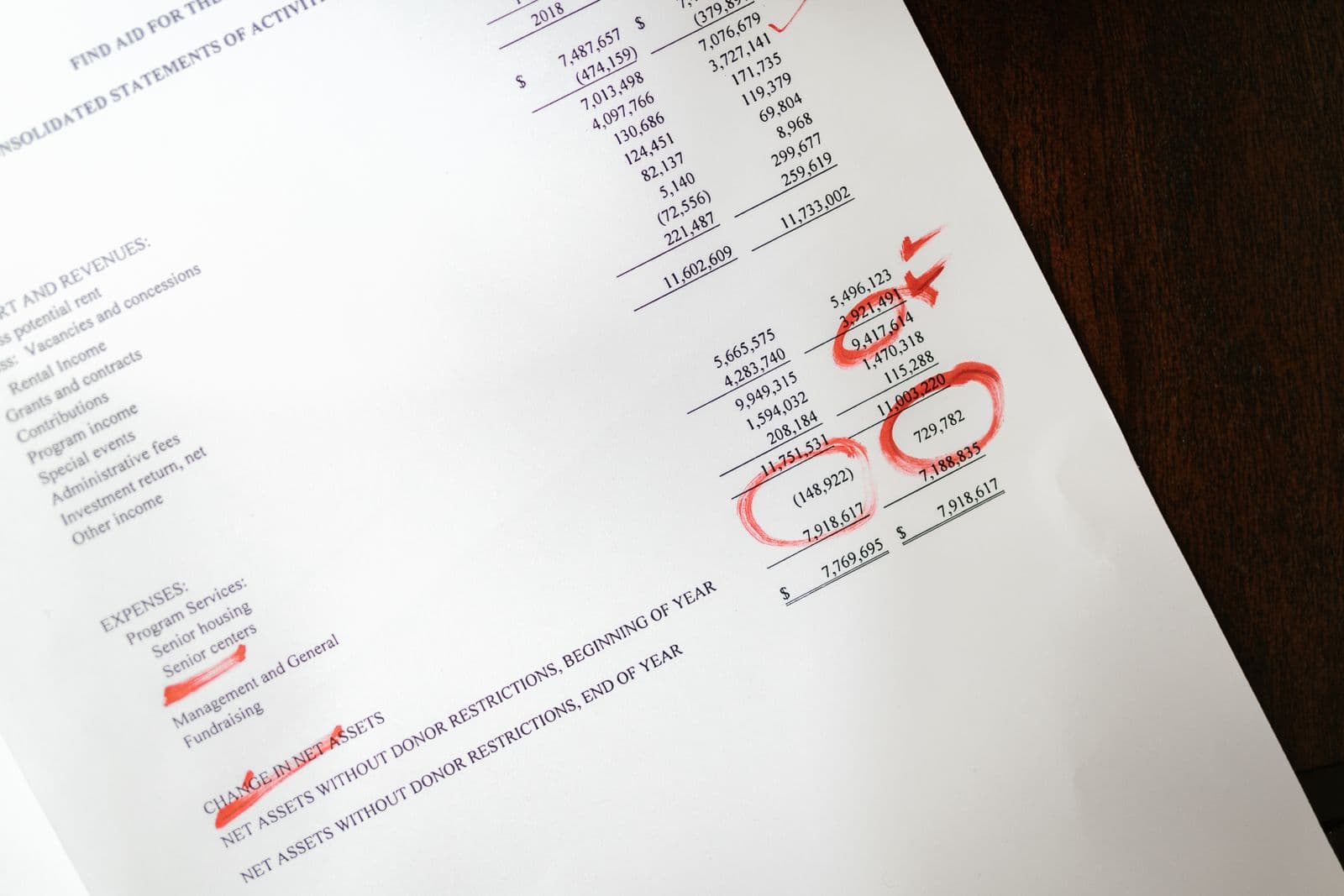
Almost every merchant statement is designed to be filed, not read. It arrives with a headline rate on page one, four pages of transaction categories behind it, and a set of line items with names nobody outside the industry uses. The result is that most business owners can tell you what rate they were quoted and almost none can tell you what they actually paid.
Those are different numbers, and the gap between them is where the money is. The good news is that the statement is more legible than it looks, because underneath the formatting there are only three costs, and they behave very differently.
The first is interchange, set by Visa and Mastercard and paid to the bank that issued your customer's card. Visa publishes the whole schedule. As of the rates effective 18 April 2026, a standard e-commerce sale on a consumer credit card that is not a rewards card sits at 1.89% + $0.10; the same sale on a Visa Infinite card that has met its spend qualification is 2.60% + $0.10. A card-present retail sale on a regulated debit card — one issued by a bank large enough to fall under the Durbin Amendment's cap — is 0.05% + $0.21, with an extra cent for issuers certifying compliance with fraud-prevention standards. A charity taking a card-not-present donation pays 1.35% + $0.05.
That range — from about 22 cents on a $10 regulated debit sale to over 3% on a premium rewards card — is the single most important fact about card acceptance. It is also completely outside your control and identical for every processor in the country. Nobody has a better deal on interchange, because there is no deal to have.
The second is network assessments and fees, which the networks charge your acquirer and your acquirer passes to you. These are not secret, but the networks do not publish them to merchants — Visa's own guidance simply tells merchants to contact their financial institution. Acquirers do publish them. Wells Fargo's payment network pass-through schedule effective 1 July 2026 lists Visa's US acquirer service fee at 0.14% on credit and 0.13% on debit and prepaid, an authorization processing fee of $0.0195 on US credit and $0.0155 on US debit, a $0.10 Transaction Integrity Fee on transactions that do not qualify for Custom Payment Service, and a $0.20 Zero Floor Limit fee on settled transactions that cannot be matched to an approved authorization. Mastercard's assessment is listed at 0.1475% — 0.14% of acquirer brand volume plus 0.0075% covering its annual acquirer licence and third-party registration fees — with a further 0.01% on consumer credit and commercial sales of $1,000 or more, plus $0.0195 network access fees on both authorization and settlement.
Two of those are worth staring at. The Transaction Integrity Fee and the Zero Floor Limit fee are avoidable: they are charged for sloppy transaction handling, not for accepting cards. If either appears in volume on your statement, your terminal configuration or your settlement process is costing you money for nothing.
The third cost is your processor's markup, and it is the only one that is genuinely up for negotiation. Everything a salesperson can do for you happens here.
How your statement presents those three costs depends entirely on the pricing model, and each model conceals a different thing.
One percentage for every card. Square publishes 2.6% + 15¢ in person on its free plan, 3.5% + 15¢ for manually keyed transactions and card on file, and 3.3% + 30¢ for online sales and invoices, with 2.9% + 30¢ available through its payments API. Stripe publishes 2.9% + 30¢ online, 2.7% + 5¢ in person, plus 1.5% for international cards and another 1% where currency conversion is required. PayPal publishes 3.49% + 49¢ for its own checkout and 2.89% + 29¢ for advanced card payments, effective 1 September 2026.
What flat-rate hides is your card mix. You pay the same 2.6% on a regulated debit card whose interchange is about 25 cents on a $50 sale as on a premium rewards card costing well over 2%. If your customers pay predominantly by debit, flat-rate pricing is quietly expensive; if they pay with travel-rewards credit cards, it may be a bargain. The statement will never tell you which, because the whole point of the model is that it does not itemise.
Interchange is passed through at cost and the markup is stated separately. Helcim publishes its whole table: interchange plus 0.40% + 8¢ in person and interchange plus 0.50% + 25¢ keyed or online at the entry tier, falling automatically with volume to 0.15% + 6¢ and 0.15% + 15¢ above $1M a month, with no monthly account fee. Dharma Merchant Services runs the same model with a small monthly account fee and no PCI or batch fees.
What interchange-plus hides is nothing much — which is why it is the model to ask for. The catch is that a published markup is only meaningful if the processor also passes network fees through at cost rather than marking those up too. Ask for a sample statement, and look for the pass-through line items to appear at the rates above.
A fixed monthly fee buys interchange at cost with no percentage markup, leaving only a per-transaction charge. Stax is the best-known example. The arithmetic is simple: divide the subscription by your monthly volume and add the per-transaction cost, then compare that to the percentage markup you would otherwise pay. The model wins at high volume and loses badly at low volume, because the subscription does not shrink when your sales do.
It is also a model that depends on the company behind it staying the same. Payment Depot pioneered wholesale membership pricing and still advertises a markup of 0.2% to 1.95% over interchange, but our review grades it C+ today: it was acquired by Stax in 2021, its actual rate is quoted rather than published, and it now charges a $10 monthly PCI compliance fee against a no-monthly-fee pitch.
Transactions are sorted into "qualified", "mid-qualified" and "non-qualified" buckets, and the processor decides what goes where. This is the model to refuse. The tiers do not correspond to anything in the network schedules, the sorting rules are not disclosed, and the quoted qualified rate applies to a minority of transactions. Our review of eMerchantBroker is a fair illustration: a reputable, long-established provider with a light complaint record, marked down substantially because third-party reporting puts its effective rates around 3% to 4% plus 15 to 25 cents under tiered pricing that nobody can verify in advance.
Add up every processing-related charge on the statement — discount, per-transaction fees, monthly account fee, statement fee, PCI fee, batch fees, gateway fees, network pass-throughs, chargeback fees, the lot. Divide by the gross card volume you processed. That is your effective rate.
Do it for three consecutive months, because one month tells you very little. A seasonal swing, an unusual number of keyed transactions, or an annual PCI fee landing in a single month will all distort a one-month figure. Three months of effective rates, plotted next to three months of volume, will show you whether your costs scale with sales or with something else.
Then look for the fees that are not really processing at all. A PCI non-compliance fee, commonly tens of dollars a month, is charged when you have not completed a self-assessment questionnaire, and it stops the moment you do. Monthly minimums bill you for not processing enough. Annual fees appear once and are easy to miss. Early termination fees do not appear on the statement at all and are the reason a bad contract survives the discovery that it is bad.
Interchange is not negotiable, but qualification for a cheaper category sometimes is, and this is where a good processor earns its markup.
None of this requires becoming an expert. It requires one afternoon with three statements, a calculator, and a willingness to ask your processor for a written interchange-plus quote that itemises pass-through fees. If your current provider will not produce one, that is the answer. Our guide to e-commerce payment processors covers the providers we have reviewed that publish their rates — which, on this evidence, is the shortest useful shortlist there is.