Payment Processing · Buyer guide
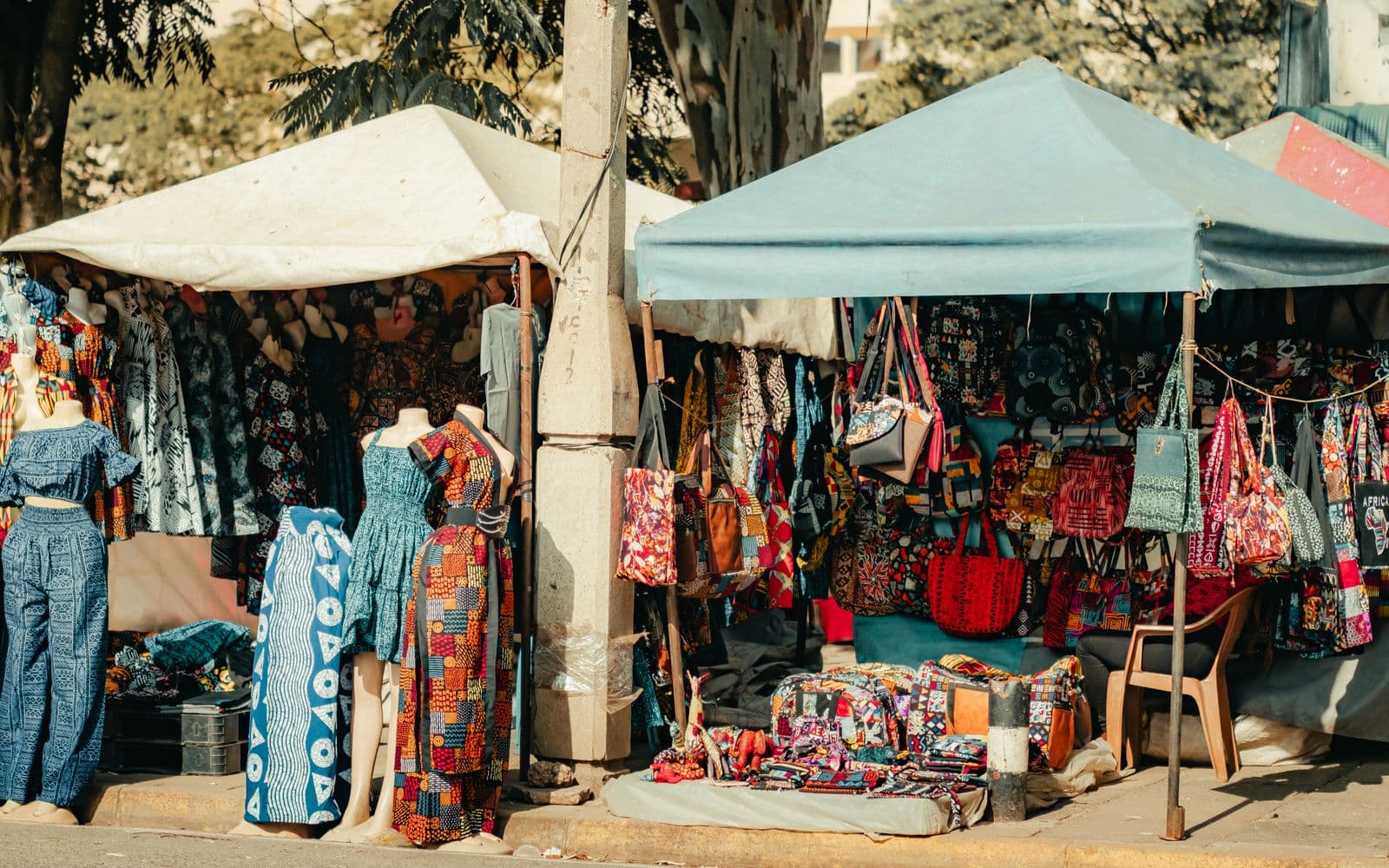
In most card markets this series covers, the question is what a card machine costs. In Kenya the first question is what M-Pesa costs, because that is how most customers pay. Safaricom reported about 1.0 million Lipa na M-Pesa merchants and 2.1 million Pochi la Biashara accounts in its results for the year to March 2026, while the Central Bank of Kenya counted 57,275 card machines in the whole country in August 2026.
No law or central bank rule caps what a Kenyan business pays to take cards or mobile money. What exists instead is Safaricom's published tariff, which the central bank approves, a set of central bank pricing principles from 2020, and the price lists of the online gateways. Here is what each route costs, read from Safaricom's, the central bank's and the providers' own pages on 31 October 2026.
A Lipa na M-Pesa Buy Goods till is the default way a Kenyan shop takes payment. The customer pays nothing to pay a till, except at authorised fuel stations, where the customer bears the charge. The merchant pays, on Safaricom's charges page as last updated on 4 August 2026:
Moving money out of a till costs extra. From 7 August 2026, Safaricom cut what a Business Till pays to send money to a mobile number or to a paybill on the Business Bouquet tariff, by up to half: sending KES 101 to KES 500 to a phone now costs KES 4, and the top band, KES 45,000 to KES 250,000, costs KES 54 rather than KES 108. Safaricom's pages give no end date for the till changes, although one news report described the whole campaign as ending on 31 October 2026, so check the charges page before you rely on them.
Pochi la Biashara, the business wallet for sole traders that runs on an ordinary M-Pesa line, works the other way round: the customer pays. Safaricom's promotional table for the three months from 1 August 2026 charges the customer nothing up to KES 200, KES 7 from KES 201 to KES 500, and up to KES 50 at the top band, KES 2,501 to KES 250,000. That promotion runs to 31 October 2026, and as of that date Safaricom had not said what applies from 1 November.
A paybill number, used for invoices and account payments, has three tariff options: Mgao splits the charge between the customer and the business, Business Bouquet charges the business nothing and the customer everything, and Customer Bouquet puts the whole charge on the business. Kopo Kopo, which resells Lipa na M-Pesa with its own dashboard, charges the same 0.55% bands as Safaricom on collections and KES 50 to send takings to a bank.
Customers of Airtel Money and Telkom can pay an M-Pesa till too: the central bank reported full mobile money interoperability, including merchant payments, in July 2022.
A business selling online usually takes M-Pesa and cards through one gateway. Published Kenyan rates, as of October 2026:
DPO Pay, now part of Network International, iPay and Equity Bank's Jenga gateway do not publish Kenyan rates on their own sites, so we have left out the figures that circulate on comparison sites.
Take a shop that takes 300 M-Pesa payments a month of KES 800 each: KES 240,000 of takings. All figures are before any VAT:
A gateway is not doing the same job as a till. It gives you a checkout page, automatic matching of payments to orders and cards in the same place, which is what an online shop needs. But for payments a customer can make by entering a till number, the till is the cheapest route by a wide margin, and payments of KES 500 or less are free.
None of the banks we checked publishes its merchant card rates; expect to negotiate. Equity Bank's tariff guide lists only what the cardholder pays at a POS (nothing), and NCBA's tariff page has no merchant entries. Two banks have added phone-based card acceptance: KCB launched a tap-to-phone service with Visa in December 2025, and Visa said on 1 July 2026 that Co-operative Bank would switch on Visa Accept in the coming weeks. Neither bank has published a merchant price.
Card use is small next to mobile money. The central bank counted 13.1 million payment cards in August 2026, of which 10.7 million were debit cards and about 342,000 credit cards, and card spending at POS terminals of about KES 29.0 billion in that month. M-Pesa handled KES 41.68 trillion in the year to March 2026, by Safaricom's count. So before you sign a terminal contract, ask what share of your customers actually want to pay by card.
This is the change most likely to raise what you pay. The Finance Act 2026, in force for most purposes from 1 July 2026, narrowed the VAT exemption for financial services: it no longer covers payment processing, settlement, merchant acquiring, gateway and aggregation services that a payment service provider supplies through software or a platform for a fee or commission. The Kenya Revenue Authority's summary says these services are not exempt from VAT; the standard rate is 16%.
The change overturns the effect of a court case. The tax authority had assessed Pesapal for KES 76.8 million of VAT on its merchant commissions for 2015 to 2019; the Tax Appeals Tribunal upheld the assessment, and in August 2025 the High Court set it aside, holding the commissions were exempt financial services. The Finance Act now writes those services out of the exemption. In late October 2026 one leading bank texted customers that 16% VAT would apply to all digital payment transaction fees from 1 November 2026, and Business Daily found banks and payment companies had set their systems up to charge it; ordinary person-to-person transfers remain exempt, according to the same report.
The same Act also treats interchange and merchant service fees on card transactions as management or professional fees for withholding tax. In practice: ask each provider whether its quoted rate includes VAT, and expect an invoice that adds it if it does not.
Visa's core rules say a merchant must not add any amount over its advertised or normal price to a Visa transaction unless the law of the country expressly requires that merchants be permitted to surcharge. We found no Kenyan law that does. Kenya's competition regulator dealt with the M-Pesa version of the problem in 2015, when merchants were passing an undisclosed 0.5% Lipa na M-Pesa charge on to customers, and it ordered Safaricom to improve price transparency. At the end of 2016 it ordered mobile money providers to show customers the charge on their phone before they confirm a transaction.
So price the cost into your goods. If your gateway is set so the customer bears the charge, as Flutterwave's is by default, check the setting before taking card payments.
Kenya is not a country where you can open a Stripe account: Stripe lists it in its extended network and points Kenyan businesses to Paystack, which Stripe owns. Paystack's Kenyan service needs Kenyan registration documents and a Kenyan bank account. A business outside Kenya can take M-Pesa through a cross-border provider: dLocal's dLocal Go price list (posted in 2024; the file itself is titled April 2023) shows 3.90% on Kenyan mobile money plus 16% local tax on the fee, and EBANX says it accepts cards, M-Pesa and Airtel Money in Kenya without publishing a price.
For a Kenyan business selling abroad, PayPal's Kenyan fee page, dated 28 October 2026, charges 4.40% plus a fixed fee to receive an international payment. Withdrawing to a Kenyan bank account is free above KES 20,000 if no currency conversion is involved, and KES 105 below it.
For the region, see our guides to payment fees in Nigeria and South Africa.