Industry · Payment Processing
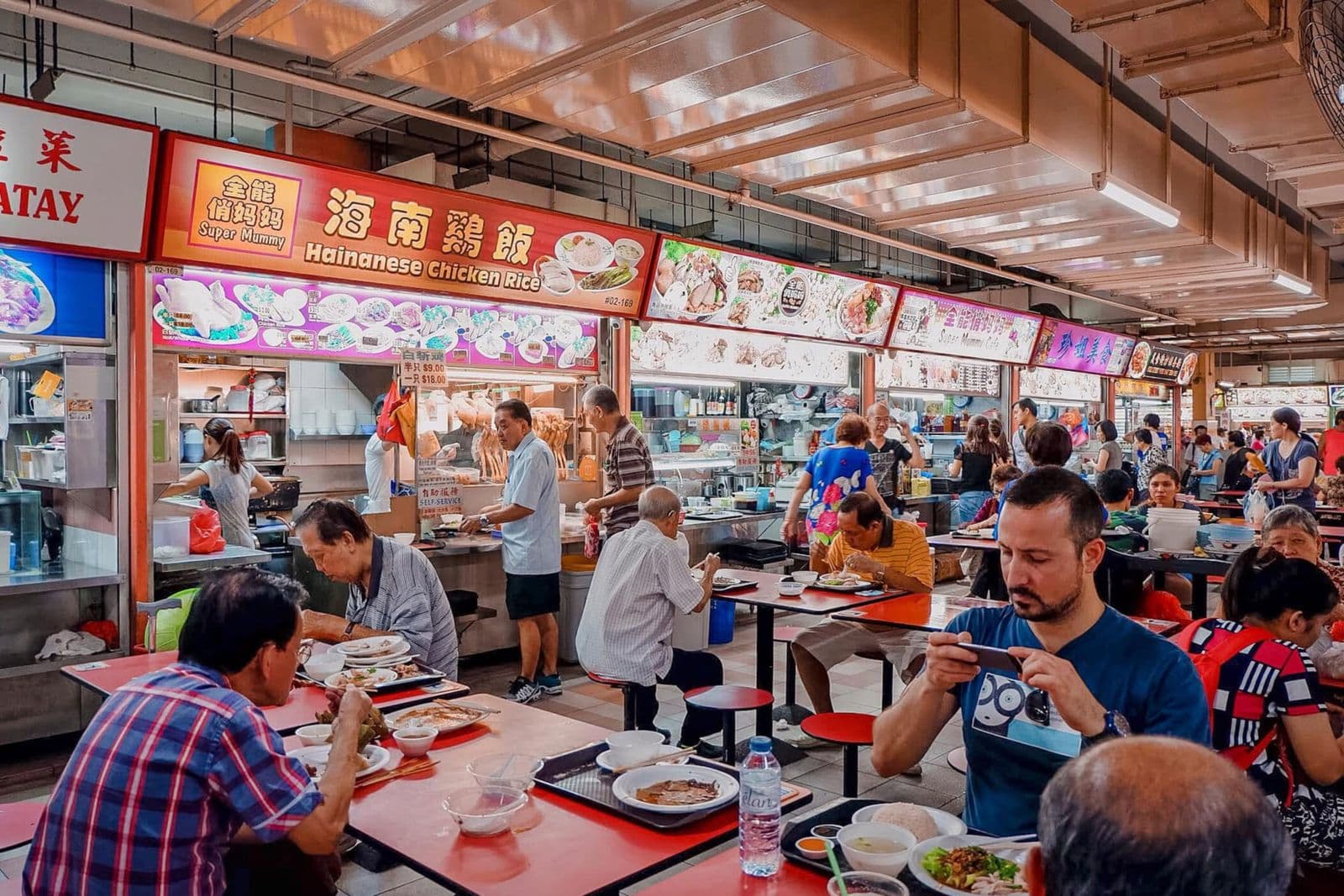
Singapore does not cap what a business pays to take a card. The Monetary Authority of Singapore (MAS) told Parliament in 2021 that interchange, the part of each card fee that goes to the customer's bank, is set by card schemes such as Visa and Mastercard, and we found no move by MAS to cap it since. So the price a Singapore business sees is whatever its provider publishes, or quotes. Among the providers that publish one, a domestic card payment costs 2.5% plus S$0.50 in person at HitPay, and between 2.8% and 3.4% online at most providers, plus a fixed fee of S$0.30 to S$0.80, rising to 3.9% plus S$0.50 on PayPal's standard checkout.
PayNow is the cheap alternative. DBS, OCBC and UOB have each waived their fee for receiving PayNow into a business account until 31 December 2028, and the payment apps and gateways that turn PayNow into a checkout charge between 0.25% and 1.3%, some with a fixed fee of up to S$0.50 on top. This guide sets out what each provider charges, as read on 14 October 2026, what an ordinary sale costs at each, and the rules on surcharges, card minimums and GST. Amounts are in Singapore dollars.
In markets with a cap, such as the EU, the UK or Malaysia, a merchant can at least see the floor under its fee. Singapore has neither a cap nor a published rate table: Visa's Singapore small-business page explains what interchange is without listing any rates, and we found no Mastercard table for Singapore. MAS has also declined to make providers disclose interchange to merchants, telling Parliament in 2021 that providers already disclose the merchant discount rate, the all-in fee, and that the market is highly competitive.
The practical consequence is that a blended rate is all most small businesses will ever see. The only Singapore price list we found built on interchange is Adyen's, which charges interchange, card scheme fees and 0.60%, plus a fixed processing fee of $0.13 per payment on its global price list, and is built for larger merchants.
Two regional providers publish no Singapore price. 2C2P and Rapyd both quote on request. Wise lists a Singapore card-acceptance rate of 3.2% + S$0.50, but its help centre says the feature is not available to new Wise Business customers, and Square and Zoho Payments do not operate in Singapore. The banks that sign up card terminals directly, UOB, OCBC and Maybank among them, take applications by form and publish no rate. DBS is the exception, through its DBS MAX app, below.
Paid online with a Singapore-issued card, a S$50 sale costs S$1.90 at HitPay, S$1.95 at Omise, S$2.10 at Revolut Business and Shopify Payments (Basic), S$2.15 at Airwallex, S$2.20 at Stripe, and S$2.45 at Xendit once its processing fee is added, the same as a PayPal checkout payment. That is a range of 3.8% to 4.9% of the sale.
In person, the same card costs S$1.25 through DBS MAX, which charges 2.50% with no fixed fee on contactless cards, S$1.75 at HitPay, S$1.90 on a Revolut terminal, S$2.00 on Shopify POS (Basic) and S$2.20 on Stripe Terminal.
The fixed fee matters most on small tickets. A S$5 coffee paid by card at HitPay's in-person rate costs 62.5 cents, or 12.5% of the sale, because S$0.50 of it is fixed. Taken by PayNow, the same S$5 costs 10 cents at HitPay in person, because its 0.4% rate has a S$0.10 minimum, and nothing at all if the customer pays straight into a DBS, OCBC or UOB business account.
PayNow lets a customer pay from their bank app by scanning a QR code or entering a business's company registration number (UEN). There are two ways to receive it, and they are priced very differently.
On a S$50 sale, PayNow costs between nothing, paid straight into a DBS, OCBC or UOB account, and S$1.00 at Airwallex, against S$1.25 to S$2.45 by card. The trade-off is that PayNow is a push payment from the customer's own bank: there is no chargeback right of the kind a card carries, and a refund is a new transfer you send back.
The Association of Banks in Singapore (ABS) prohibits merchants from imposing any form of surcharge on consumers for PayNow transactions. Its merchant FAQ, updated in November 2025, says no merchant is exempt and that a bank can suspend or cancel a merchant's PayNow service for a breach. MAS has backed the rule in written replies to Parliament in May 2024 and October 2025.
No Singapore statute we found bans a card surcharge. The restriction comes from the card networks and the contracts built on them. Visa's Core Rules (April 2026 edition) say a merchant must not add any amount over the advertised or normal price unless local law expressly requires that surcharging be allowed. The rule's own carve-outs cover New Zealand and credit cards in Canada and the US, with separate surcharge rules for Australia and Europe. None covers Singapore. ABS told merchants in 2008 that under the merchant agreement they are not allowed to impose any additional charge for card payments, and must absorb the fees. We could not read Mastercard's current rules for this guide.
If you do charge for card payments, consumer law adds a disclosure duty. The Competition and Consumer Commission of Singapore's price-transparency guidelines, in force since November 2020, say mandatory surcharges and service fees should be included in the headline price, or shown clearly and prominently beside it where they cannot be calculated in advance. Falling short can breach the Consumer Protection (Fair Trading) Act.
The same Visa rules also forbid a minimum or maximum transaction amount. The only exceptions are US-issued credit cards in the US, and transactions in the European Economic Area and the UK. A "cards for S$10 and above" sign is common in Singapore, and some consumer finance sites recommend one to small shops, but it breaks Visa's rules. Steering small payments to PayNow does not.
NETS runs Singapore's domestic debit network, offers the master acquirer track for the unified SGQR+ code, and is the master acquirer for the government's Hawkers Go Digital programme. It publishes no public price list; its merchant agreement refers to a price guide sent to each merchant. The most recent official figures we found are in Enterprise Singapore's Heartlands Go Digital programme material, updated June 2024: a NETS terminal at up to S$60 a month, 0.8% for NETS debit and QR payments, 1.99% to 3.5% for credit cards, and a free NETS SGQR code at 0.8%. Those are programme rates from 2024, so ask NETS for its current guide. The government subsidy that covered the 0.5% fee on hawkers' e-payments, on the first S$20,000 a month per stall, was last extended to the end of 2025; some secondary sources say it runs to June 2026, but we found no official notice saying so.
Singapore's 9% GST does not apply to the fee itself in most cases. IRAS's GST guide for the banking industry, published in January 2026, treats the merchant discount rate paid to an acquiring bank as an exempt supply. Stripe says GST applies to certain of its fees, such as Terminal hardware, Radar and Connect; Revolut says its fees other than plan and card-delivery charges are exempt; and Airwallex states its fees exclusive of GST where applicable. Budget for GST on hardware, software plans and add-ons rather than on every card payment, and check your provider's invoice.
If you are comparing providers across the region, our guides to card fees in Malaysia, Indonesia and the Philippines use the same method.