Payment Processing · Buyer guide
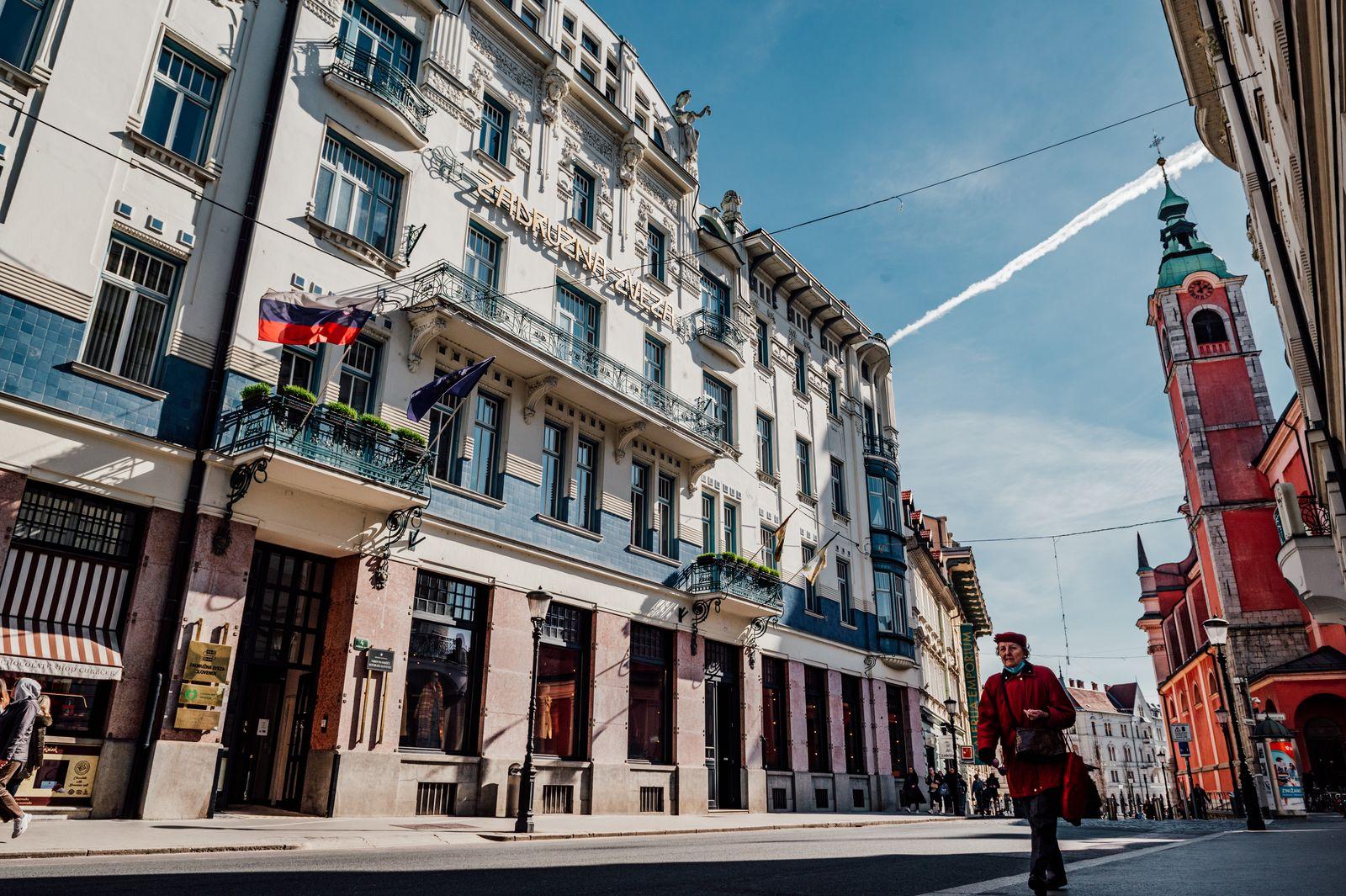
Slovenia has used the euro since 2007, so a Slovenian business that takes cards pays in euro under the same EU rules as the rest of the euro area. Interchange, the fee your provider passes to the cardholder's bank, is capped at 0.2% of a consumer debit card payment and 0.3% of a consumer credit card payment, and a shop may not add a fee for paying with a consumer card. Two things are particular to Slovenia: a card payment counts as cash under the fiscal receipt rules, and a bill before the government would oblige every seller to accept at least one electronic way of paying.
Below is what providers publish for Slovenia, read on their Slovenian pages on 14 November 2026. Card fees are per payment and are compared on the same basis: in person or online, on consumer cards issued in the European Economic Area unless we say otherwise. Hardware and plan prices are flagged where the provider says they exclude VAT, which SumUp's Slovenian prices show at 22%.
Slovenia's banks sell terminals too but do not publish the commission. NLB says on its card-acceptance page that it sets prices individually according to your turnover, your line of business and your relationship with the bank, and that it installs the terminal free of charge. Its terminals take both cards and Flik, the instant-payment scheme described below.
Take a café or shop with 160 card payments a month of €25 each: €4,000 of takings, all on standard Slovenian consumer cards. On the published rates, before hardware:
On SumUp's own rates, Plačila Plus pays for itself from about €1,980 a month on standard consumer cards, a little below the €2,300 it quotes. Mollie's Pro plan is the opposite case: Mollie markets it for takings above €1,900 a month, but at a €25 average sale its 0.85% + €0.10 costs more per payment than the 1.20% it replaces, so Pro would cost €70.00 here. On domestic consumer cards Pro only beats pay-as-you-go once the average sale is above about €29, and even then needs more than about €5,700 a month in takings to recover the €20 fee. Card mix matters too: Mollie's 1.20% is for domestic cards, and a visitor's Austrian or Italian card costs 1.80%. Cards outside the EU caps, common with non-EEA tourists and business buyers, cost 2.6% + €0.02 at Revolut, 1.95% at SumUp and 2.89% + €0.05 at myPOS. Mollie charges 2.90% on any business card but only its 1.80% other-consumer-card rate on a consumer card from outside Slovenia.
On a €40 order paid with a Slovenian consumer card that works out at €0.60 with Revolut, €0.72 with myPOS, €0.73 with Mollie, €0.85 with Stripe, €1.00 with SumUp and about €1.15 with Viva.com once one 3-D Secure check is counted. Paid with a German or Croatian consumer card, the Mollie fee rises to €0.97; the others do not change.
Flik is Slovenia's own instant-payment scheme, offered through the banks, with its Flik Pay and Flik POS apps licensed by Bankart. A customer pays from the bank app on their phone, by tapping or scanning a QR code at the till, or by entering a phone number online, and the money reaches the shop's account within seconds, including when banks are closed. Flik says it has more than 800,000 users in Slovenia. A business switches it on through its own bank: most bank POS terminals already support it, and a shop without one can install the Flik POS app on a phone or tablet or print a static Flik QR code. Flik publishes no merchant price. NLB sells Flik acceptance together with card acceptance and says its pricing for the service is set individually, so ask your bank what each Flik payment costs before you assume it is cheaper than a card.
As a euro-area country, Slovenia's banks have had to receive instant euro transfers since 9 January 2025 and send them since 9 October 2025, may not charge more for an instant transfer than for an ordinary one, and must give payers a free check that the payee's name matches the account. E-money and payment institutions in the euro area, such as many app-based providers, have until 9 April 2027.
NLB's business tariff, in force from 27 October 2026, shows what a plain transfer costs. Its business account costs €6.80 a month for a sole trader and €13.00 for a company. Each incoming payment from another bank costs the business €0.13, and an outgoing euro payment through its online banking €0.41 to another NLB customer or €1.05 to another bank, up to €50,000. A customer paying a €40 invoice by transfer therefore costs the shop €0.13, against €0.60 or more by card online. Stripe and Mollie each charge €0.35 per SEPA Direct Debit.
Slovenia's Payment Services Act (ZPlaSSIED), in force since 22 February 2018, carries the EU ban on surcharges into Slovenian law. Banka Slovenije has explained that merchants may not charge a fee for accepting any payment card issued to consumers in Slovenia by banks, savings banks, e-money institutions or payment institutions, because payments with those cards fall under the EU regulation that caps interchange. Its explanation does not extend the ban to commercial cards, unlike Croatia, which bans a fee for any way of paying. You can still build payment costs into your prices.
Under Slovenia's Fiscal Verification of Invoices Act (ZDavPR), an invoice that VAT rules require and that is paid in cash must be confirmed by the financial administration, FURS, before it is issued: the electronic cash register sends the invoice data to FURS, which confirms receipt. The act defines cash payment to include payment by debit or credit card, cheque and any other method that is not a direct transfer to a transaction account. So a card sale needs a fiscally verified receipt just as a cash sale does, whichever reader you use, with the same limited exceptions, such as reporting later or using a pre-numbered receipt book. A reader not linked to your register means keying each amount twice. Since 1 January 2026, sales through vending machines need no invoice but must report each transaction to FURS in real time. We found no FURS guidance on whether a Flik payment counts as cash or as a direct transfer; ask your accountant.
There is no general duty in Slovenian law today to accept cards. That may change. In July 2026 the Ministry of Finance put out a revised bill on access to and use of means of payment that would oblige sellers of goods and services, digital content included, to accept cash with defined exceptions and to offer at least one electronic means of payment. The ministry aimed to pass it by the end of the year and was still consulting retailers and consumer groups in September. We found no sign that it had been passed by 14 November 2026. As drafted, the duty covers an electronic means of payment, not cards specifically, so Flik or a QR code could be enough.
The EU Interchange Fee Regulation caps interchange at 0.2% of a consumer debit card payment and 0.3% of a consumer credit card payment. The caps do not cover commercial cards or cards issued outside the EEA, which is why most providers above charge more for them.
For neighbouring markets, see our guide to card fees in Croatia and our guide to card fees in Austria.