Payment Processing · Buyer guide
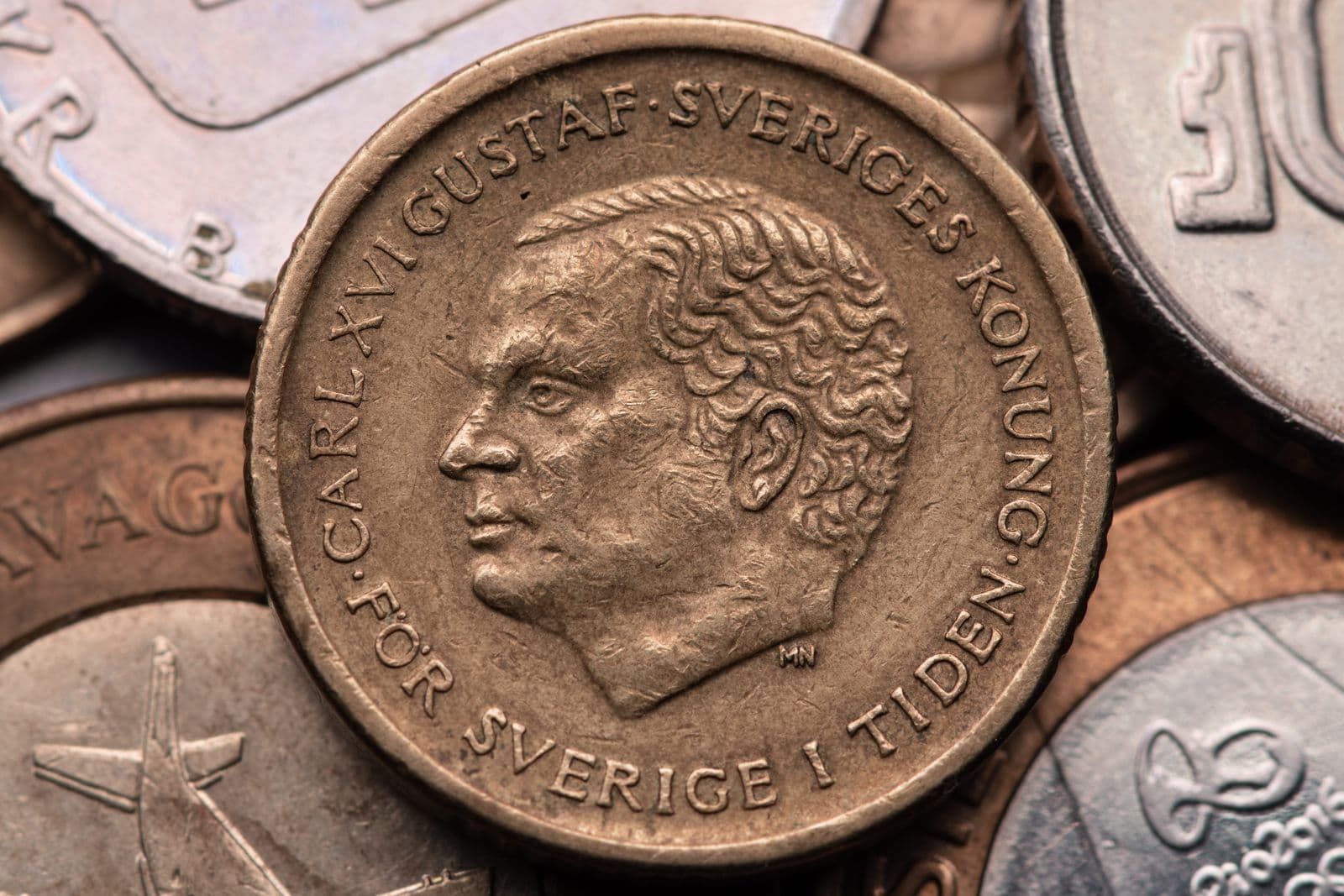
Since 1 July 2026, Swedish grocery shops and pharmacies with a staffed till have had to accept cash. The law came from a country where, according to the Riksbank's Payments Report 2026, only 5% of people paid cash at their most recent purchase in a shop last year, down from 10% in 2023 and 40% fifteen years ago. About 92% paid by card in some form. For almost every Swedish business the real question is still what cards and Swish cost, and the answer depends far more on the provider than on the card networks.
Here is what each provider publishes, read from its Swedish pages on 21 October 2026, what the banks charge for Swish, and the rules on cash and surcharges. Prices exclude VAT unless stated.
Sweden applies the EU Interchange Fee Regulation, so the bank that issued a customer's card can charge the merchant's provider no more than 0.2% on a consumer debit card and 0.3% on a consumer credit card. Visa's Swedish domestic schedule, dated April 2025, sets exactly those figures for every kind of consumer transaction, whether tapped, inserted or online. Company cards are not capped: the same schedule charges 1.30% in store and 1.65% online on a Visa business card, rising to 1.65% and 2.00% on Visa Infinite business cards.
No provider passes on 0.2%. Card scheme fees and the provider's own costs and margin come on top, and most small-business providers fold everything into one flat rate. That is why a reader on the counter typically costs 1.5% to 1.9% even though the interchange inside it is a fraction of that.
To compare them on one basis, take a shop that takes 50,000 kr a month on Swedish consumer cards in 200 sales of 250 kr. SumUp costs about 745 kr at its standard rate, or about 744 kr on the 349 kr plan. SumUp's page says the plan saves money above 41,350 kr a month; on its published rates we make the break-even nearer 50,000 kr of debit and credit sales, and higher still if many customers use company, international or Amex cards. Viva.com comes to about 845 kr, Stripe about 900 kr, Zettle about 925 kr and myPOS about 945 kr, before hardware. With many small sales the fixed per-sale fees at Stripe and myPOS matter more; with fewer, larger ones they matter less.
Swish is what Swedes use instead of cash between people, and the Riksbank found 74% of businesses accept it, though only 2% of consumers used it for their most recent purchase in a shop. Getswish AB, the company owned by the banks that runs it, reported more than 8.8 million consumer users and 1,135 million payments worth 601 billion kr in 2025, with more than 280,000 businesses and organisations taking payments. A business does not buy Swish from Getswish. It buys it from its own bank, and each bank sets its own price. Swish Handel plugs into a till or online checkout; Swish Företag, for smaller businesses and associations without a till system, is paid to a Swish number or QR code. The bank prices for Swish Handel, from each bank's own page:
Because the fee is fixed, Swish is cheap on large payments and expensive on small ones. At 1.95 kr, Handelsbanken's Swish costs less than SumUp's 1.49% card rate on any payment above about 131 kr; at Swedbank's 3 kr the crossover is about 201 kr. On a 30 kr coffee, the same 3 kr fee is 10% of the sale. For the shop above, 200 Swish payments of 250 kr would cost between about 475 kr a month at Handelsbanken and 650 kr at Swedbank, including the monthly fee.
Payment providers can also take Swish for you, at their own price. Stripe lists Swish at 1% + 3.00 kr, capped at 7.00 kr, but its documentation still describes Swish as a private preview and says Stripe acts as the merchant of record. Viva.com charges 0.99% online, with a 0.50 kr minimum, and Worldline 2.45 kr per payment on top of the bank's own fee. Zettle charges nothing for Swish, but the payment goes to your own Swish number, so your bank's Swish fee still applies; Zettle simply records it in the till.
Online card payments cost more. Stripe charges 1.5% + 1.80 kr on standard EEA cards, 2.8% + 1.80 kr on premium EEA cards, 2.5% + 1.80 kr on UK cards and 3.15% + 1.80 kr on other international cards, plus 2% where currency conversion is needed. Viva.com charges 2.19% + 1.80 kr on Swedish consumer cards online, myPOS 1.30% + 2 kr on EEA consumer cards, and SumUp 1.49% on payment links. Klarna publishes no standard Swedish merchant price list that we could find; through Stripe it costs from 2.99% + 4.50 kr and through Viva.com 2.99% + 3.50 kr. Trustly bank payments likewise have no public price list that we could find; Viva.com charges 0.99% for them, with a 5.73 kr minimum.
Sweden's Payment Services Act says a payee may not charge the payer a fee for using a payment instrument. Konsumentverket, the consumer agency, puts it plainly in guidance reviewed in August 2026: businesses may not charge you for paying by card, and a fee is only allowed if the same fee applies to every way of paying. The Act does allow a discount for a particular method. The ban is not limited to consumer cards, unlike Germany's or Ireland's, so the higher cost of company cards cannot be passed on as a surcharge either.
The act passed by the Riksdag on 27 May 2026 obliges grocery retailers and pharmacies to accept cash for goods and services sold at physical premises with a staffed till. It took effect on 1 July 2026, six months later than the government's first proposal. The obligation applies to payments up to one-tenth of the price base amount, about 5,920 kr in 2026, and to no more than 25 coins. A shop may refuse cash where it cannot be handled securely or where the cost of handling it would prevent the shop from staying open, and can refuse individual sales for an acceptable reason. No authority supervises it; the finance committee's report says businesses are themselves responsible for meeting the obligation.
Every other business may still go card-only or Swish-only. Two points from the Riksbank's 2026 report are worth knowing anyway: 61% of businesses said they use cash and Swish as their fallback when the internet goes down, and an industry agreement took effect on 1 July 2026 under which essential purchases such as food, medicine and fuel can be paid offline with a physical card and PIN. If your reader can store card payments while offline, find out what your provider does with ones that are later declined.
The Riksbank also asked businesses what accepting payments costs them. A third did not know. A quarter put it at 0% to 1% of turnover, 31% at 1% to 2% and 8% above 2%. The flat rates above sit in the middle band; if you do not know which band you are in, your provider's monthly statement will tell you, and it is worth checking against the rates here before you sign anything new.