Payment Processing · Buyer guide
You closed the merchant account eight months ago. The processing fees stopped. The $89 that leaves your bank on the fourteenth of every month did not, and the company taking it is one you have never heard of. Nothing has gone wrong. You signed two agreements that afternoon, not one, and only one of them was with your processor.
The equipment lease is the longest-lived contract in small business payments and the least read. It is written as a finance lease, which is a specific legal instrument, and that instrument is built to be unbreakable. This is not a matter of opinion. The New York Attorney General spent nine years proving that one of these leasing programmes was fraudulent from end to end, won, and as of the most recent update to the state's own case page, the merchants who won have not been paid a cent.
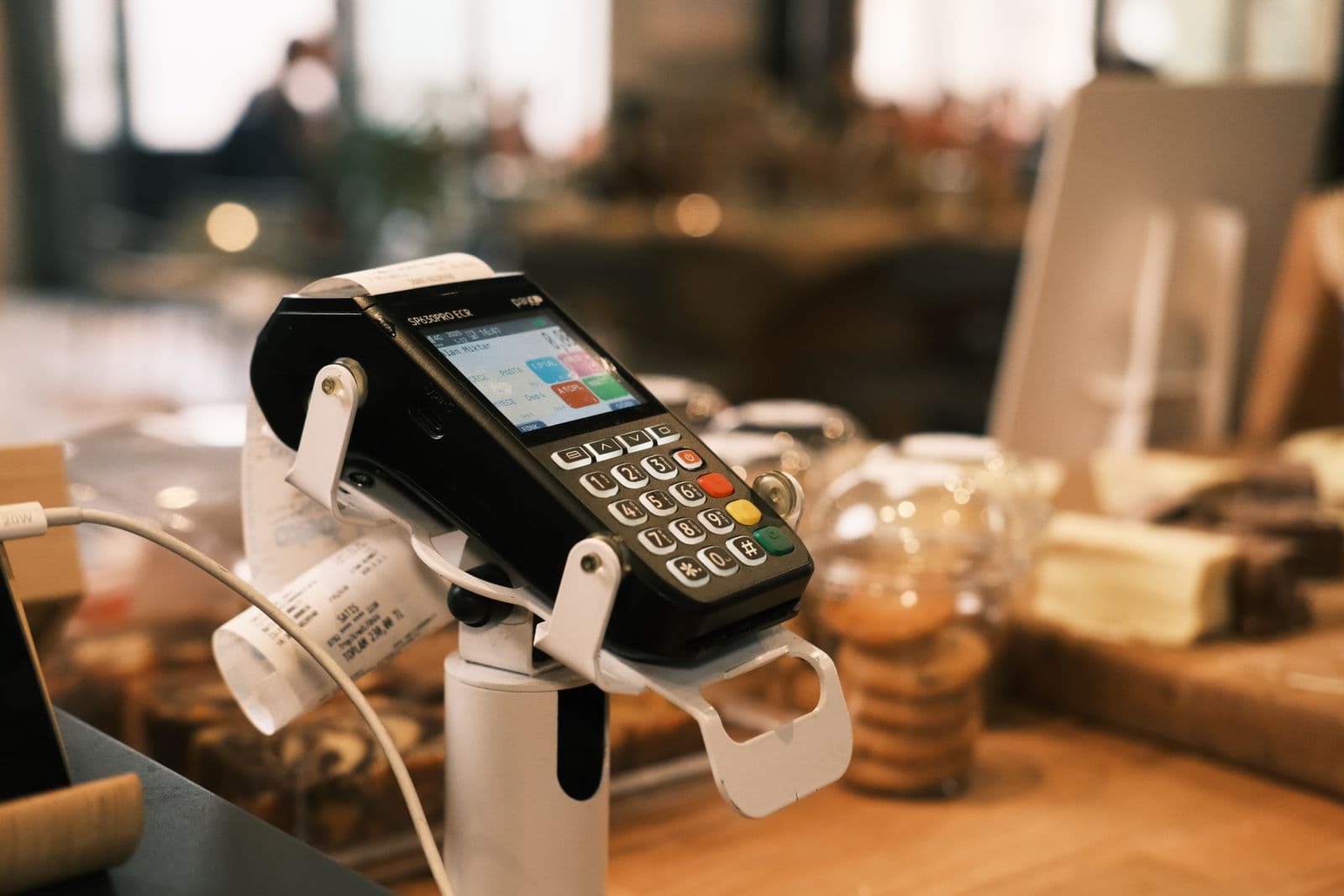
A processor sells you card acceptance. A leasing company rents you the box. In the traditional agent-sold channel these arrive on the same clipboard, signed in the same five minutes, and are frequently described by the same salesperson as one deal. They are not. The lease is usually originated on the agent's paperwork and then assigned to a third-party finance company, which from that moment has no obligation whatsoever under your processing agreement.
That is the whole mechanism. Because the lessor is a different company, cancelling processing does nothing to the lease. Neither, usually, does closing the business, because you guaranteed the lease personally.
It shows up plainly in the contract terms this site records. Our review of Merchant One notes that equipment is offered both on a "Terminal Placement Program" and on lease terms, and that such leases are frequently separate, non-cancellable agreements with a different company, to be read as two contracts rather than one. The review of North (North American Bancard) gives the same warning in one line: treat any equipment lease as a separate contract that survives the processing one.
Most merchants assume "non-cancellable" is aggressive boilerplate that a sympathetic judge would set aside. It is not boilerplate. It is a statute. Article 2A of the Uniform Commercial Code, which states have adopted with local variations, sets out at section 2A-407 that "in the case of a finance lease that is not a consumer lease, the lessee's promises under the lease contract become irrevocable and independent upon the lessee's acceptance of the goods."
The next subsection removes the exits one by one. A promise that has become irrevocable "is not subject to cancellation, termination, modification, repudiation, excuse, or substitution without the consent of the party to whom the promise runs." Lawyers call this the hell-or-high-water rule, and the point worth absorbing is that it is self-executing: it applies to a qualifying finance lease whether or not the printed contract contains such a clause.
Three consequences follow, and they are the three arguments merchants actually try. The terminal breaking is not a defence to payment. The rate the agent promised turning out to be different is not a defence to payment. The equipment becoming obsolete, which over 48 months it will, is not a defence to payment. Whatever remedy you have runs against whoever sold or made the equipment, not against the finance company collecting from your bank account. And the protection carved out at the start of the section is for consumer leases. A lease signed by a business is not one.
The comparison that settles this takes thirty seconds and is almost never made, because the monthly figure is quoted and the total never is.
As of September 2026, Square sells the Square Terminal outright at $299, or $27 a month for twelve months. Helcim lists its Smart Terminal at $349 a unit plus shipping, or $32 a month for one year. Both are countertop devices that do the job a leased terminal does, and in both cases the device is yours at the end.
Against that, independent guides that have collected these contracts report a standard 48-month term at $59 to $99 a month. Those figures come from third-party reviewers rather than from a published schedule, so treat them as the range to check your own quote against. At the top of that range the lease totals $4,752 before tax, insurance and administrative pass-throughs, for hardware with a street price in the low hundreds. The gap is not the equipment. It is finance charge and sales commission, and you are paying it for four years.
In April 2016 the New York Attorney General brought a proceeding under Executive Law section 63(12) against Northern Leasing Systems and a group of affiliates including Lease Finance Group, MBF Leasing and Pushpin Holdings, alleging that they trapped small business owners across the country into leases for overpriced card processing equipment, and then abused the courts to collect.
In June 2020 the court found the claims proved. It rescinded the leases, vacated the default judgments obtained through the scheme, ordered an accounting and imposed a permanent injunction. The state's own tally is 29,617 default judgments vacated, against a backdrop of more than 5,600 complaints made to the Attorney General's office since 2010.
The money order followed in 2023: restitution of $680,990,038 from the leasing companies and disgorgement of $9,303,157.77 from the law firm that ran the collections. On 2 January 2025 the Appellate Division, First Department affirmed it, modified only to limit one salaried associate's share of the disgorgement, and the Court of Appeals subsequently denied leave to appeal. The scheme's successor entities were pursued separately: on 9 June 2026 the same court affirmed a further judgment of $2,778,478.31 against Leasing Expenses Company and related respondents, in a proceeding the courts found involved the same people running the same scheme under new names.
Now the part that should change how you treat the paperwork. The Attorney General's public case page, last updated in January 2025, states plainly that no funds have been collected pursuant to the $680 million judgment. Nine years of litigation, a total win, an award of two thirds of a billion dollars, and the merchants are still waiting. Money paid under one of these leases should be assumed unrecoverable at the moment you sign.
Equipment leases are signed by the business and guaranteed personally by whoever is holding the pen, which is sometimes an owner and sometimes a manager who did not realise what they were signing. When the leasing company collects, it collects from the guarantor.
In the New York proceeding, guarantors were sued in New York City Civil Court regardless of where they lived. Most lived in other states; some lived in California. Default judgments followed, and those judgments then surfaced years later against people applying for mortgages, which is why the Attorney General's office ended up publishing searchable lists of vacated judgments and a template letter to hand a lender. That is the real exposure in a terminal lease. It is not $89 a month. It is a personal judgment in a court a thousand miles away, discovered when you apply for credit.
This is not a universal industry practice, and the providers that avoid it tend to say so directly. Our review of Dharma Merchant Services records that Dharma states it does not lease equipment at all, which is the mechanism behind most multi-year lock-ins in this business. Helcim publishes no contracts, no leases and no termination fees, and sells its hardware outright or over twelve months. Square is month-to-month with hardware bought at list price.
The place to be careful is the reseller channel, where the same hardware reaches merchants on wildly different paper. Clover is the clearest example: the platform is sold through many merchant service providers, and our review notes that early termination charges, PCI fees and chargeback costs all depend on the partner contract rather than on Clover. Identical devices, entirely different exit terms, decided by whoever signed you up.
The lease is the one contract in the stack that does not care what you negotiate elsewhere. You can win every argument about interchange markup and monthly fees and still be paying $89 a month to a finance company in another state. If you want to see what you are actually being charged and by whom, start with how to read a merchant processing statement, then go and find out who owns your terminal.