Industry · Payment Processing
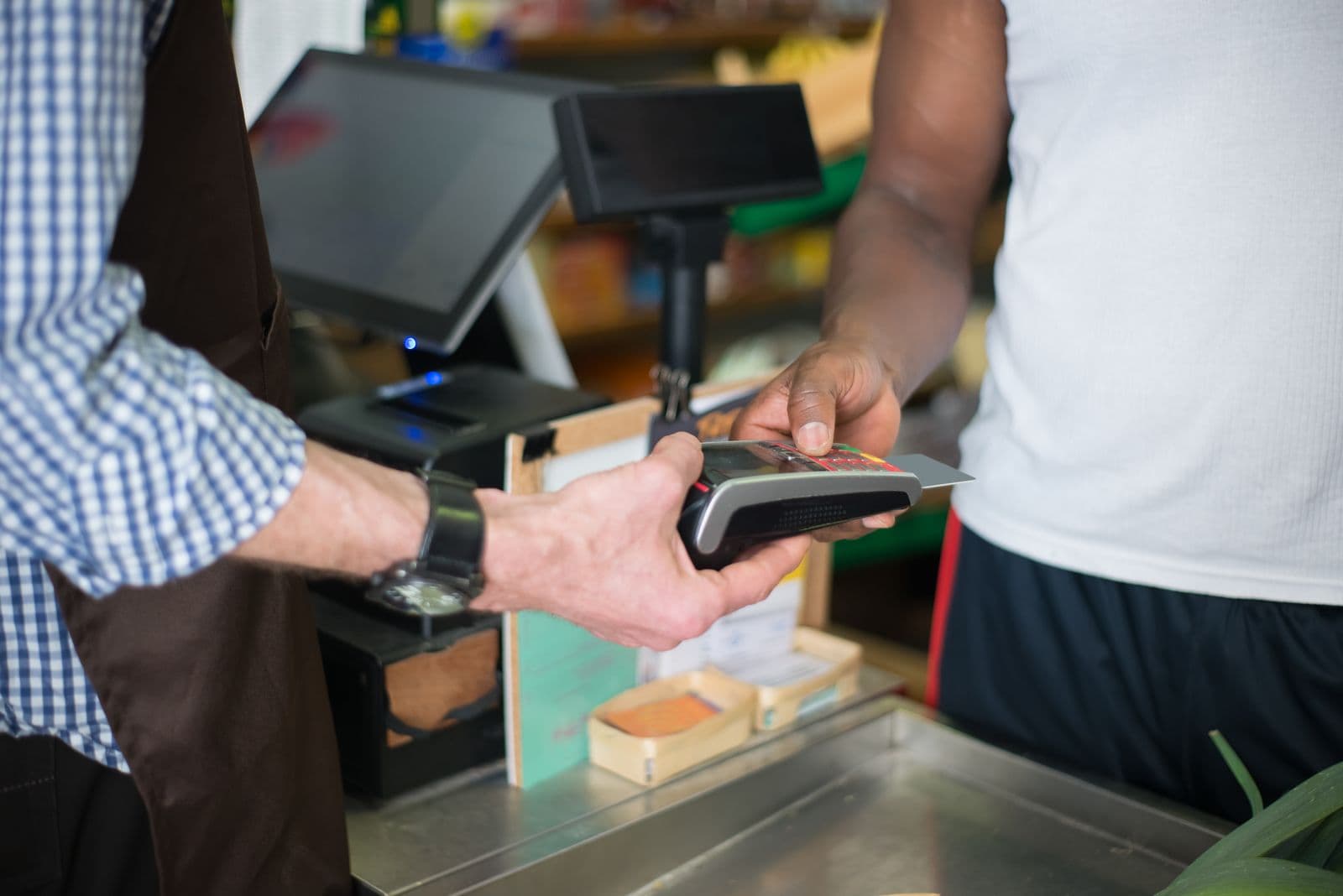
For fifteen years the cheapest card an American business could accept was a debit card from a big bank. The Durbin Amendment saw to that: since October 2011 a bank with $10 billion or more in assets has been able to collect no more than 21 cents plus 0.05 percent of the sale in interchange, plus a cent for fraud prevention. Capital One is one of the largest banks in the country, and until last year its debit cards were priced under that ceiling like everyone else's.
They are not any more. Capital One completed its acquisition of Discover on 18 May 2025, began reissuing its debit cards onto the Discover network the following month, and told investors on 21 July 2026 that the conversion was finished. A Capital One debit card now runs on a network Capital One owns, and the rule that capped it does not reach a network that is also the issuer. This article sets out why, what the new numbers are, and which merchants actually see them. Figures are as of September 2026.
Regulation II implements the Durbin Amendment. It caps the interchange fee that a covered issuer — a bank or credit union holding $10 billion or more in assets with its affiliates — may receive on an electronic debit transaction, at 21 cents plus 0.05 percent, with a further 1 cent for issuers that meet the Board's fraud-prevention standards. On a $50 sale that is a ceiling of about 24.5 cents. The Federal Reserve's own data shows what the cap is worth: in its report covering 2023, covered transactions averaged 23 cents in interchange while exempt cards from smaller institutions averaged 52 cents.
The cap is written around an interchange fee, which is a fee a network sets and an issuer receives from the merchant's acquirer. That is how Visa and Mastercard work, in what the industry calls a four-party system: cardholder, issuer, merchant, acquirer, with the network in the middle setting the price. Discover and American Express are built differently. One company issues the card, runs the network and, historically, signed the merchant. There is no separate issuer to receive an interchange fee; the network simply charges the merchant a discount.
When the Board wrote the final rule in 2011 it addressed this directly. Commenters, it recorded, recognised that three-party systems do not charge explicit interchange fees but a merchant discount. The Board's conclusion was that the rule's definition of a payment card network 'excludes three-party systems because they are not payment card networks that route transactions within the terms of the statute'. A Congressional Research Service report on the regulation put the consequence in one line: the Durbin Amendment does not apply to the three-party model. None of this was contested in 2011, when no big-bank debit portfolio ran on a three-party network.
Capital One's purchase changed the arithmetic. It is a covered issuer several times over, with a migrated portfolio that Forbes, citing analysts, put at more than $100 billion of annual purchases. Move that portfolio onto a network the bank itself owns and every transaction on it becomes a three-party transaction. The cap does not have to be repealed, challenged or reinterpreted; it simply stops describing the transaction.
The reissue was visible to cardholders first. Capital One's guidance page for the new cards tells customers they will receive a card with a new sixteen-digit number, a new security code and a new expiry date, that their account number and PIN stay the same, and that they should look for the Discover, PULSE or Diners Club marks rather than Mastercard's. Cards were issued account by account through the second half of 2025, and processing consultants tracking the BINs reported the volume on Discover's unregulated debit ranges climbing month on month from July 2025.
On the second-quarter earnings call on 21 July 2026, chief executive Richard Fairbank said the company had completed 'the conversion of our debit card business to the Discover Network' earlier in the year and called it 'a smashing success'. Chief financial officer Andrew Young said the quarter's results 'include the full quarterly run rate debit revenue synergies'. Network transaction volume for the quarter was about $190 billion, up 156 percent on the partial quarter a year earlier — a figure that includes Discover's own credit cards, so it does not isolate debit, but the direction is not in doubt. Fairbank added that the company is now testing the origination and conversion of Capital One credit cards on the Discover network, with no decision yet on how much credit volume will move.
What the change is worth has been estimated from outside. Forbes reported on 22 July 2026 that Deutsche Bank analyst Mark DeVries put the rise in average interchange paid by merchants on the migrated cards at about 0.7 percent, and that Truist analyst Brian Foran calculated the annualised revenue gain at roughly $1 billion, most of it attributable to leaving the cap. Capital One has not published a debit-specific figure of its own, and we have not found one.
Discover does not publish its interchange schedule the way Visa and Mastercard do, so the unregulated figures below are the ones processing consultants publish from it; three independent firms list the same numbers for the three categories that matter most, and they are the rates an interchange-plus merchant will see on a statement. The regulated figure is from Regulation II and, for comparison, the exempt figures are from Visa's own schedule effective 18 April 2026 — what a debit card from a bank under $10 billion costs on Visa.
Two things stand out. The first is that Discover's card-present rate is above Visa's exempt retail rate — a Capital One debit card is now more expensive to accept in a shop than a debit card from a small credit union, which for fifteen years has been the dearest debit there was. The second is the online rate: at 1.75 percent plus 20 cents, Discover debit is priced within sight of a consumer credit card, and an e-commerce merchant with a customer base that skews to Capital One's checking accounts will notice it.
A change in interchange reaches a merchant only if the merchant's price is built on interchange. This is the same point we made about the Durbin cap's uncertain future, and it cuts the same way here.
Flat-rate merchants do not see it. Square charges 2.6 percent plus 15 cents for a tapped or dipped card on its free plan whatever the card is; Stripe's standard pricing is 2.9 percent plus 30 cents online; PayPal works the same way. A Capital One debit card that now costs those processors three times what it did in 2024 costs their merchants exactly what it did in 2024. The processor absorbs it, and the cushion that makes that possible is the flat rate itself, which was always well above what regulated debit cost.
Interchange-plus and subscription merchants see it on the next statement. Helcim prices at interchange plus 0.40 percent and 8 cents in person; Dharma Merchant Services at interchange plus 0.15 percent and 8 cents; Payment Depot and Stax pass interchange through as well — Payment Depot for a flat cents-per-transaction fee, Stax under a monthly subscription. On every one of those plans the Discover debit line is a new, higher number, and nothing the processor does can change it. Stripe's own support note on the acquisition says as much: merchants on what it calls network cost-plus pricing should expect 'higher interchange' on Capital One debit, plus a one-off rise in card account updater charges while the cards are reissued.
How much it adds up to depends on how many of your customers bank with Capital One. Optimized Payments, a fee-audit firm, modelled a telecom merchant with $1 billion of annual card volume and Capital One at 12 percent of it, and put the increase at about $72,000 a year once the whole Capital One debit book had moved — a 26 percent rise in what that merchant paid to accept Capital One debit — with a portfolio-wide effect it estimated at three to five basis points of total debit cost. For a small business the dollars are smaller and the proportion is the same: on the consultants' portfolio-wide estimate, a shop taking $40,000 a month in cards is looking at tens of dollars a month, not hundreds. The point is less the size than that it is a cost you cannot negotiate away, because it sits below your processor's margin.
Regulation II's second half is routing: an issuer must enable each debit card on at least two unaffiliated networks so that a merchant can choose the cheaper one, and since 2023 that has applied to online transactions too. Capital One's page names only Discover, PULSE and Diners Club on the new cards, and all three are Discover brands. Whether a card whose networks are all one company satisfies a rule written for two unaffiliated ones is not something the Fed has addressed publicly since the migration; the 2011 rule records a three-party system asking to be exempted from the routing provisions, and its definition excludes such systems from the term 'payment card network' altogether. In practice, the consultants tracking these cards advise merchants to ask their acquirer whether any second route exists for the affected BINs — they list 601141, 601144 and 601146 as the ranges to watch — and to make sure least-cost routing is switched on where it can still do something.
Two smaller costs come with a reissue of this size. Every card was given a new number, so any merchant storing cards on file paid for account updater lookups to keep subscriptions alive; Stripe flagged the one-off rise explicitly. And a reissued card that the customer has not activated will decline; Stripe's note puts the window at 130 days from issue, and adds that Discover's country coverage differs from Mastercard's, so a card that worked abroad may not.
A billion dollars a year for changing the logo on a card has been noticed. On 6 July 2026 the Wall Street Journal reported that JPMorgan Chase, Bank of America, Wells Fargo and PNC had held preliminary discussions about buying Fiserv's STAR and Accel debit networks, the idea being that a bank which owns the network its cards run on is in the same position Capital One is now in. The report described the talks as early and tentative, said some of the banks had already decided against proceeding, and noted that executives worried a deal would provoke lawmakers, regulators and merchants. Nothing has been announced since.
The regulatory backdrop is unsettled in the other direction as well. The cap itself was vacated by a federal court in August 2025 and survives only because the judge stayed his own order pending the Fed's appeal; a Board proposal to cut the cap by roughly a third has sat unfinished since 2023. So a merchant modelling debit for 2027 faces a cap that might fall, might be cut, and is already being stepped around by the largest issuers with the means to buy a network. The one durable lesson is the same as always: know which of your costs are interchange and which are margin, because only one of them is yours to negotiate.
If you cannot tell the two apart on your statement, start with how to read a merchant processing statement. The Discover debit lines are where this article lands on paper, and for most businesses they are the only place it does.