Payment Processing · Buyer guide
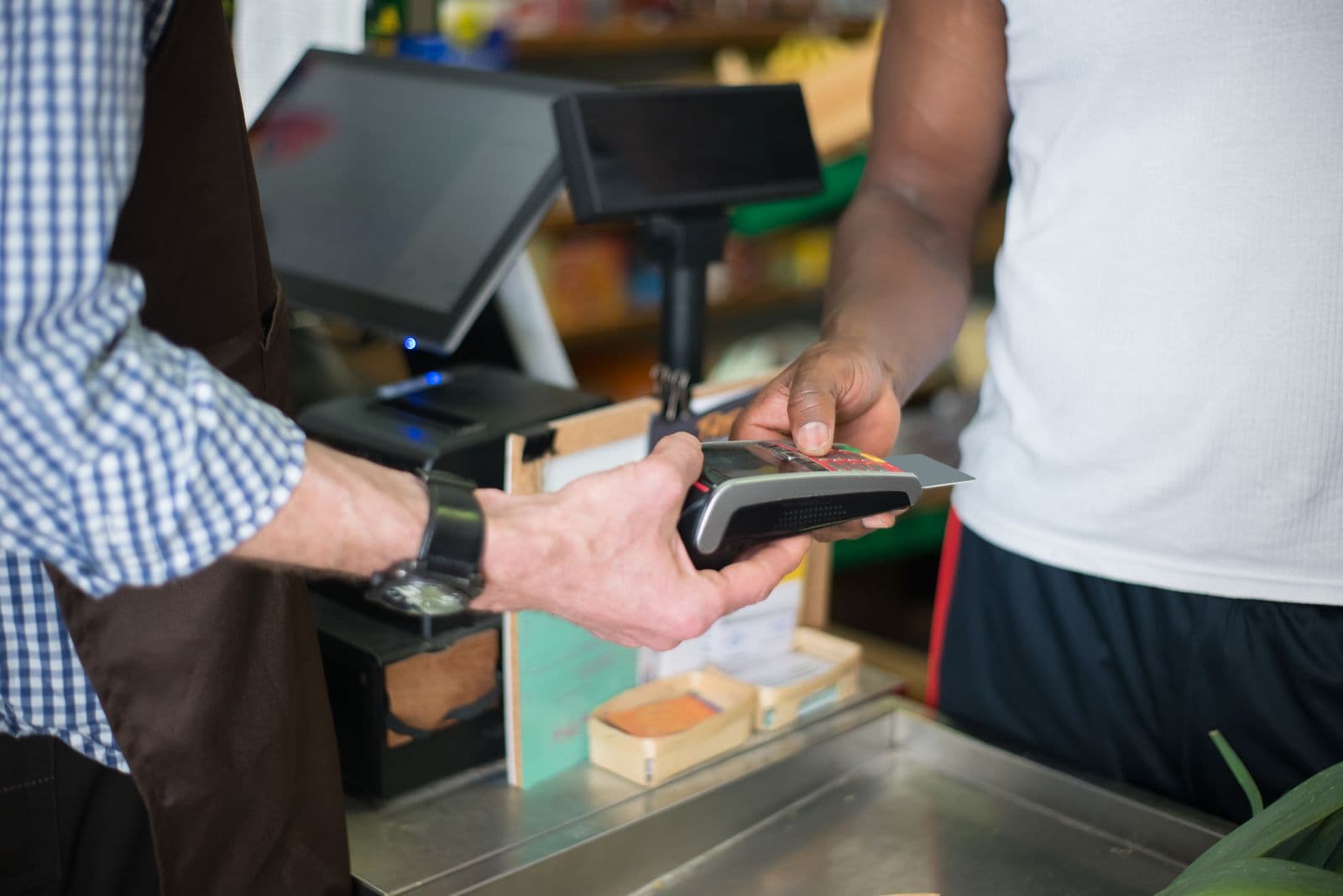
Every card processor with a mobile app now offers to put today's sales in your bank account today, for a fee. The fee is a percentage of the money — 1.5 percent at Stripe and PayPal, 1.75 percent at Toast, Clover and GoDaddy, 1.95 percent at Square — and it is charged on money that is already yours, to shorten a wait that at most of these processors is a single business day. This article sets out what the wait actually is, what each processor charges to skip it, what the charge works out to when you price it as what it is — a fee for one to three days' use of your own money — and where the same speed comes free. Figures are from the processors' own pricing and support pages as of September 2026.
The baseline matters, because the value of an instant payout is the gap between it and the standard one. Square's standard transfer is free and arrives 'as soon as the next business day': payments taken before 5 p.m. Pacific are in the bank the following business day, Friday's takings arrive Monday, and nothing is sent on a Saturday. Toast deposits the next business day for batches closed before 9:30 p.m. Eastern, two business days later for batches closed after it, and never on a weekend or federal holiday. GoDaddy Payments pays the next business day from a close-of-day time you set. SpotOn funds the next morning at no cost. Helcim sends card funds the next business day, free, to any bank on the RTP or FedNow real-time networks, and in one to three business days otherwise.
The online processors are slower. Stripe's standard settlement for a US account is two business days, after a first payout that 'typically' takes 7 to 14 days and 'can take longer depending on your industry, country of operation, and risk level'. Shopify Payments settles US sales to a bank account in three business days, counted so that a Friday sale pays out on Wednesday, and Shopify warns that the bank may take a further one to three days to post it. PayPal's standard transfer to a bank takes one to three business days. Lightspeed says one to three.
Some of that delay is plumbing — batch cut-offs, and the bank transfer at the end. But the extra day or two on the newer platforms is also a buffer against refunds, disputes and fraud on accounts the processor has not yet learned to trust, which is why Stripe's documentation says 'risk criteria might prevent your account from changing to the default settlement timing'. A merchant paying 1.5 percent to skip Stripe's two days is, in part, paying to override Stripe's own caution about them.
The useful way to price an instant payout is against the days it saves, because that is the only thing you are buying. Take a $2,000 batch on a Tuesday.
At Square the standard transfer arrives Wednesday. Instant costs $39 to have it Tuesday evening — 1.95 percent for roughly one day. Expressed as a simple annual rate, that is 1.95 percent multiplied by 365, or about 710 percent. Over a weekend the same fee buys three days, Friday to Monday, which brings it down to about 240 percent. At Toast the standard deposit is also next business day, so 1.75 percent for one day is about 640 percent a year, or about 210 percent across a weekend. At Stripe the standard wait is two business days, so 1.5 percent buys two days on a weekday — about 270 percent — and four calendar days on a Friday, about 140 percent. SpotOn's 0.2 percent for a single night is about 73 percent, high for what it is but a different order of magnitude from the rest.
Those are rates no lender charges. We worked through what the processors' own loans cost in our piece on processor financing, and the flat fees there translate to APRs in the tens of percent — expensive, and still an order of magnitude cheaper per day than paying to receive your own money early. The difference is that a loan gives you money for months. An instant payout gives it to you for a day.
The habit is what costs. A merchant who instant-transfers every day is not one day ahead every day; they are one day ahead once, on the first day, and thereafter simply paying 1.95 percent of every sale to stay there. At $2,000 a day that is $39 a day and roughly $14,000 a year, and the business's cash position at the end of the year is exactly one day's sales better than it would have been with free standard transfers — the same one day it gained in week one. A merchant who did it once, to make Friday's payroll, paid $39. That is the whole difference between a tool and a tax.
The processors that own a bank account use speed to keep your money in it. Square's checking account, provided by Sutton Bank, receives your Square sales 'immediately after a payment is processed' at no charge; the 1.95 percent applies only when the money leaves for an outside bank. Shopify says a Shopify Balance account receives Shopify Payments payouts within one business day against three to an external bank — 'up to 7 days earlier than a bank' once the bank's own posting time is counted. Wix Payments offers instant payouts to a Wix checking account and three to five business days to a US bank. The exception is Toast: instant deposit into Toast Checking, held at Thread Bank, still carries the 1.75 percent fee, so Toast's account offers the budgeting tools without the free speed.
The banks that process cards do the same thing with their own deposit accounts. Chase Payment Solutions advertises 'deposits as soon as same day at no extra cost when using a Chase Business Complete Banking account'. Bank of America Merchant Services requires settlement into a Bank of America business checking account in any case, and on that basis offers 'no-fee same-day funding to qualified accountholders and next-day funding to all merchants' — same-day funding runs 365 days a year, about two and a half hours after the processing cut-off, subject to credit approval. Neither is generosity: a business whose card receipts land in the bank's own accounts, same day, is a business that will not move its banking.
And two processors have simply made next-morning funding the standard. Helcim's Faster Deposits is free for any merchant whose bank is on the RTP or FedNow network — the real-time rails behind many instant payouts — and SpotOn funds the next morning at no cost with Rapid Fund at 0.2 percent for the nights and weekends. Dharma Merchant Services funds card-present batches the next business day and card-not-present in two, and will move an established card-not-present merchant to one day on request, which is the older, unglamorous route to the same result: ask.
A fee of 1.5 to 1.95 percent is worth paying when the alternative costs more than that, once. Payroll due on Friday with the week's takings arriving Monday; a supplier offering a 2 percent early-payment discount on an invoice larger than the batch; a broken walk-in fridge on a Saturday. In each case the fee is a one-off, and it is cheaper than an overdraft charge, a late-payment penalty or a lost weekend of trade. It is not worth paying as a routine, and a processor's app that puts the instant button beside the balance every evening is designed to make it one.
Before paying for speed, check what the standard schedule can already do. Move the close-of-day or batch time earlier so a batch clears the cut-off — Toast's 9:30 p.m. Eastern, Square's 5 p.m. Pacific — because a batch that misses it by ten minutes costs a full day for nothing. If you bank with Chase or Bank of America, or would, their processing arms fund same day into your own account at no charge. If you are on Helcim or considering it, check whether your bank is on the RTP or FedNow list. If you are on Stripe and past the first months, ask whether your account can move to the default settlement timing. And if you are on Toast or Square and using instant transfers most days, the annual cost of that habit is larger than the difference in processing rates between most of the providers on this page — which makes it, on its own, a reason to reprice.
The last thing to check is why the money is slow in the first place. A payout that has stretched from next day to a week is not a scheduling problem, it is a hold, and paying for instant transfers will not fix it; the processor will usually withdraw the option before it freezes funds. Our guide to reserves and holds covers what the contract allows and what to do.