Payment Processing · Buyer guide
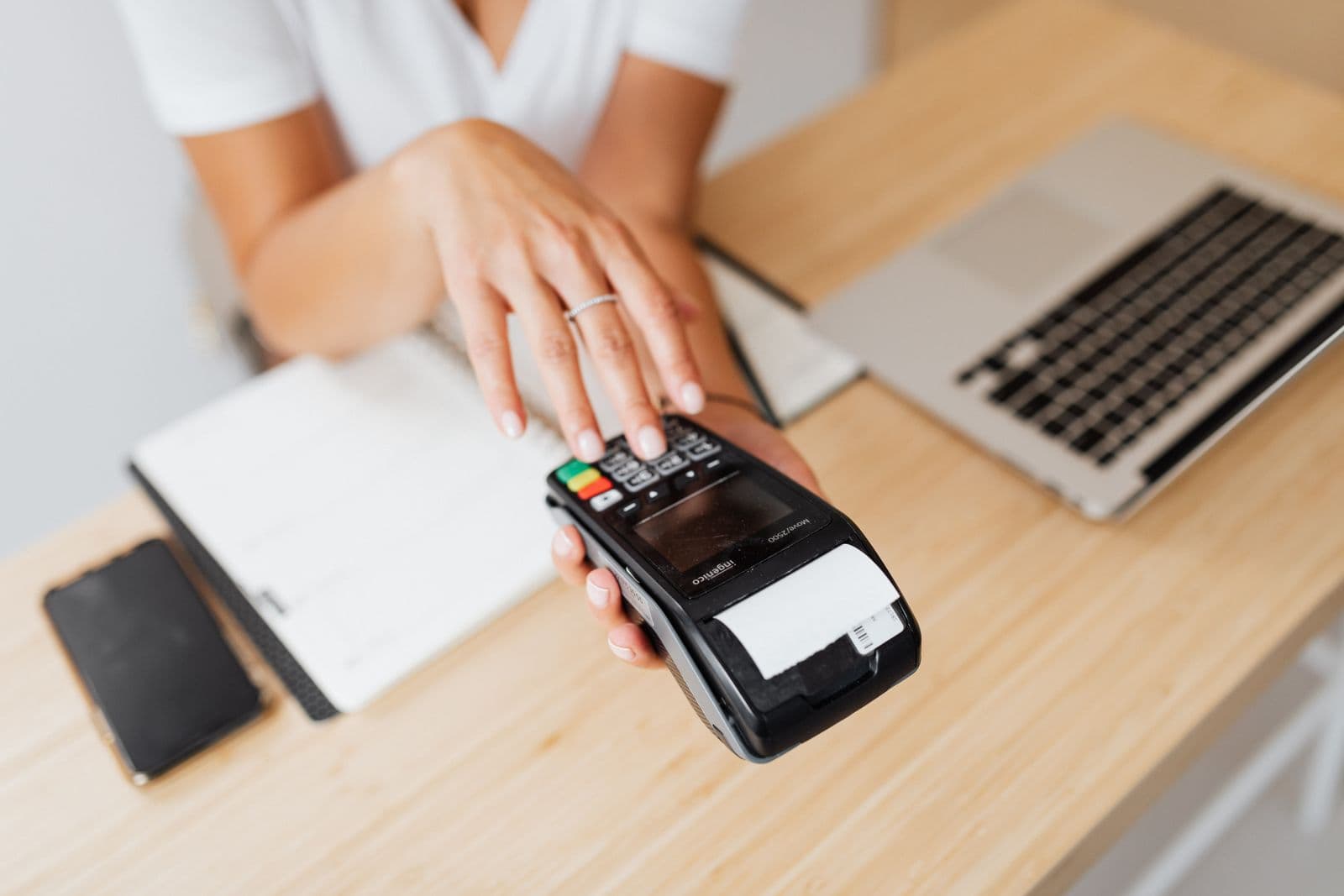
Every processor's rate card has a line for it, under a different name each time — 'manually entered', 'keyed-in', 'card information typed in', 'manual card entry' — and the number on that line is always the highest one on the page. At the flat-rate processors it is 3.4% to 3.5%, against 2.3% to 2.7% for the same card tapped on a reader. That is a difference of roughly a percentage point on every phone order, every mail order, every customer who reads a number out at the counter because the chip will not read, and every invoice a bookkeeper pays by typing a card into a virtual terminal.
The point has a reason, but it is not the same size for every card, and at some processors it is larger than the cost it covers. This piece puts nine processors' keyed and in-person rates on one basis, as published in September 2026 for US merchants, and then goes to the source — Visa's interchange table, effective 18 April 2026 — to see how much of the premium is the network's and how much is the processor's. If you want to find the keyed line on your own bill first, see how to read a merchant processing statement.
All figures are the processor's published US rate for a domestic card, in-person first and keyed second. Where a processor has plans, the entry plan is given unless stated.
Squarespace Payments publishes no keyed rate at all; its fee page lists card rates by plan and nothing for manual entry. Toast quotes each restaurant its own rates and publishes no rate card, so it is not in the table.
On a $100 sale, the flat-rate premium for keying rather than tapping is 90 cents at Square, 95 cents at Stripe against its Terminal rate, $1.20 at PayPal, 90 cents at Shopify Basic, $1.20 at Clover Standard, 95 cents at SumUp and $1.00 at QuickBooks. Seven processors, and the premium lands between 0.9 and 1.2 points every time. Now the question is what it is paying for.
Interchange is the fee the card's issuing bank receives on each sale, set by the network, paid by every processor and passed to you either explicitly, on an interchange-plus account, or inside a flat rate. Visa publishes its US table, and the current one — 'Rates Effective April 18, 2026' — has a separate column for how the card was read.
For an exempt consumer debit card, meaning one issued by a bank small enough to escape the federal cap, the card-present retail rate is 0.80% plus 15 cents. The same card keyed is listed under 'CPS/Retail Key Entry, Debit' at 1.65% plus 15 cents, identical to the 'CPS/Card Not Present' and 'CPS/e-Commerce Basic' rates. That is 85 cents more on a $100 sale: the largest step anywhere in the table, and by itself most of the flat-rate premium.
For a regulated debit card — one from a bank over $10 billion in assets, which the Federal Reserve's data puts at about 61 percent of US debit transactions — the interchange is 0.05% plus 21 cents, plus a 1-cent fraud-prevention adjustment for qualifying issuers, on the same line whether the card was tapped or typed. The federal cap does not distinguish, so the issuer receives about 26 cents on a $100 sale either way, and the network cost of keying it is nothing. (Why the cap survives at all, and where the 61 percent comes from, is in our piece on the debit interchange cap.)
For consumer credit, Visa restructured its programmes in April into a card-present set it labels 'Product 2' and a card-not-present set labelled 'Product 1'. A basic card with no rewards is 1.51% plus 10 cents card-present and 1.89% plus 10 cents card-not-present; a Traditional Rewards card 1.65% against 2.04%; a Signature Preferred card 2.10% against 2.50%; an Infinite card 2.30% against 2.60%. The step is 0.30 to 0.39 points, or 30 to 39 cents on a $100 sale. Visa publishes the qualification rules for these programmes in a separate guide; Dharma's plain-English summary of them lists an address check with a matching zip code, a single electronic authorisation and settlement within a day of shipment, and says a transaction without the address check drops a tier. A keyed transaction that misses the rules drops to 'Non-Qualified Consumer Credit' at 3.15% plus 10 cents, which is the rate a badly configured virtual terminal quietly pays on everything.
Mastercard's table is not on a public page of its own, but Helcim republishes it: a consumer card at 1.65% plus 10 cents card-present and 1.95% plus 10 cents keyed, a 0.30-point step in the same range as Visa's. And American Express adds a flat 0.30% to every keyed or card-not-present OptBlue sale, which both Helcim and Dharma list and pass through.
Put the two side by side on a $100 sale. The network's step for keying is 85 cents on an exempt debit card, 30 to 39 cents on a consumer credit card, 30 cents on an Amex card and zero on a regulated debit card. The flat-rate processors' step is 90 cents to $1.20 regardless. On a credit card the premium is two to three times the interchange difference; on a regulated debit card it is pure margin — though a processor would fairly say it is also pricing the fraud liability, which on a card-not-present sale is the merchant's and, if the merchant cannot pay, the processor's.
The interchange-plus accounts show the same split with the numbers visible. At Helcim a keyed sale costs the card-not-present interchange, the assessments, and a margin of 0.50% plus 25 cents instead of 0.40% plus 8 cents — a margin step of 27 cents on $100 on top of whatever the network charges. On an exempt debit card that makes the keyed sale about $1.12 dearer than the tapped one; on a basic credit card about 65 cents; on a regulated debit card 27 cents. At Dharma the margin step is smaller, 0.05 points and 3 cents, so the keyed premium is almost entirely the network's. That is the argument for interchange-plus if you key a lot of cards: you pay the real difference, and you can see it.
The saving is not in finding a cheaper keyed rate — they are all within a tenth of a point of each other — but in moving transactions off the keyed line. Three routes are priced on the pages above.
The other route — passing the premium on to the customer as a surcharge — has rules of its own, set by the networks and by a growing list of states; they are laid out in our guide to credit card surcharging.
The keyed rate is the one line on a rate card that every processor prices the same way and none of them explains. Visa's table explains it: about a third of the premium is the network's on a credit card, most of it on a small-bank debit card, and none of it on the regulated debit cards that make up most debit transactions. The rest is the processor's, and the way to pay less of it is to type fewer numbers.