Payment Processing · Buyer guide
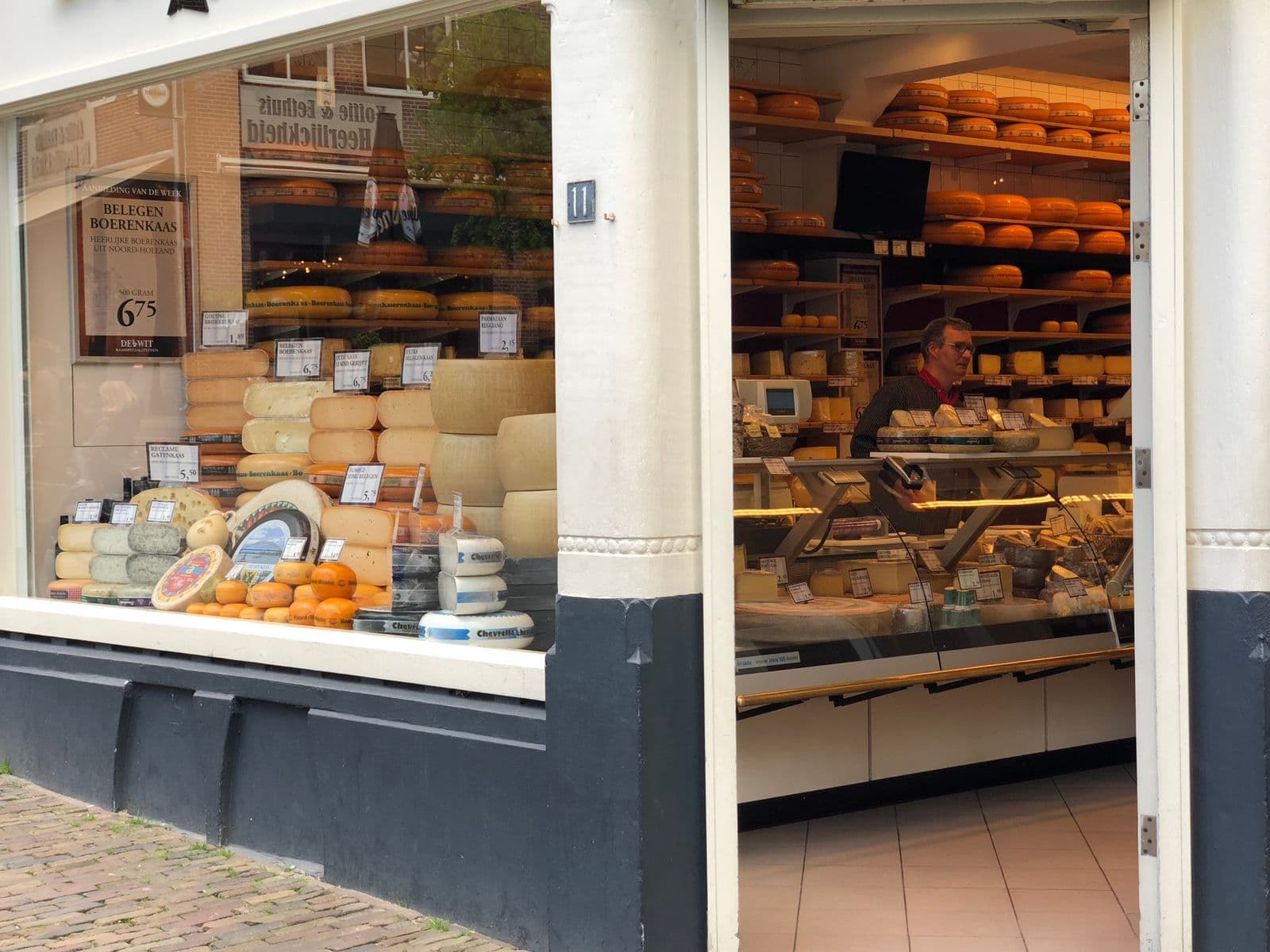
The Dutch pay at the till by card. De Nederlandsche Bank (DNB) and the Betaalvereniging found in their joint survey that card payments made up 83% of payments at Dutch checkouts in 2025, up from 80% the year before, while cash fell to 17%. Most of those card payments are debit, the pinpas: the Betaalvereniging Nederland, the payments industry association, also counted 5.83 billion debit card payments worth €150 billion in 2025, and 47% of them were made with a phone or watch rather than a card.
That matters for what a shop pays, because debit is where Dutch pricing splits in two. Some providers charge a percentage on every card; others charge a fixed few cents on a Dutch debit card and a percentage only on credit and foreign cards. For a shop whose customers mostly pay by pinpas, the difference can be close to a factor of four. Here is what each option costs, read from the providers' own Dutch pages on 25 October 2026, and the rules on surcharges and cash.
The Netherlands applies the EU Interchange Fee Regulation, which caps the interchange a card issuer receives on consumer cards at 0.2% for debit and 0.3% for credit, and Dutch rules go further for domestic debit: at most €0.02 a payment, whatever the amount, according to the competition authority ACM. Visa's Dutch domestic schedule, dated April 2025, charges exactly that on a Visa consumer debit or V PAY card, and 0.30% on a Visa consumer credit card. Business cards are not capped. The same schedule charges 1.30% on a Visa business debit card in store and 1.65% online.
So on a €20 pinpas payment, the issuer takes about two cents. Everything else a shop pays on that payment is the card scheme's fee and the provider's margin. A flat 1.49% on the same payment is 30 cents.
Worldline (B-), publishes Dutch prices on its product pages, but each product carries a different price list. Its EX4000 all-in-one terminal page quotes €0.13 on a Dutch debit card (Visa Debit and Debit Mastercard included), 1.40% on foreign debit cards, 1.40% + €0.10 on credit cards, a 1.20% surcharge on business and non-EEA cards and a €60 annual service fee, with the terminal at €129 excluding VAT until 10 December 2026 instead of €199. Its Link/2500 pin pad page quotes €0.063 per European consumer debit card, 1.1% (minimum €0.15) on Mastercard and Visa, and a €60 annual service fee. Payouts take up to one working day on the Link/2500 page and up to 48 hours on the EX4000 page. Ask which price list your contract uses.
Take a shop that takes 1,000 payments a month of €20 each, all on Dutch consumer debit cards: €20,000 of takings. On the published prices, before VAT on any subscription:
The fixed-cent plans win for any shop that mostly takes debit and has steady volume. The percentage plans win for a market stall or seasonal business with low or irregular takings, where a monthly fee would eat the saving. At 1.49% against myPOS Pro, the break-even here is roughly €3,300 a month of debit takings at an average sale of €20; a larger average sale makes the fixed-cent plans win sooner.
Dutch banks started issuing Visa Debit and Debit Mastercard cards in 2023 to replace Maestro and V PAY, which Mastercard and Visa are phasing out; customers get the new card when their old one expires. The Betaalvereniging says every payment terminal in the Netherlands has been updated to take them. What has not caught up everywhere is pricing. Mollie's price list gives its lower rate to Maestro and V PAY by name, and Viva.com's €0.14 applies only to local debit Mastercard and Maestro, so a Visa Debit falls under its 1.69% Visa rate. Pay. and Worldline name the new cards in their debit rows. If your provider's table still splits Maestro and V PAY from everything else, ask in writing what it charges on a Visa Debit or Debit Mastercard, because those will soon be most of the pinpasses your customers carry.
There is a second consequence. Left to the card schemes' honour-all-cards rule, a shop that takes a brand's debit cards would have to take its credit cards too. EU law overrides that for European cards: a business may accept a scheme's consumer debit cards and refuse its credit and business cards, as both the Betaalvereniging and the ACM note, so a shop that wants to keep credit cards out still can.
Online, iDEAL is the Dutch default, and it is now branded iDEAL | Wero as it moves to the European Wero system; our guide to iDEAL becoming Wero covers what changes. On cards, the providers' published Dutch online prices for EEA consumer cards are:
Article 7:520 of the Dutch Civil Code lets a business ask a fee, or offer a discount, for using a particular payment method, but no higher than its direct costs. The same article then bans any fee for payment instruments whose interchange is capped under the EU rules, which covers ordinary consumer debit and credit cards, and for payments under the SEPA regulation, which covers iDEAL. A surcharge is therefore legal only on cards outside the caps, such as business cards and cards issued outside the EEA, and only up to cost.
Neighbouring countries apply the same EU rules with local twists; see our guides to Belgium and Germany.
Both chambers of the Dutch parliament have adopted a duty for businesses to accept cash for payments below €3,000. The government's guidance says it is working on the exceptions, but in January 2026 the finance minister put that work on hold until EU negotiations on a legal-tender regulation settle how far national exceptions may go, and as of October 2026 the duty has not taken effect. A separate law on access to cash, published in July 2026, covers the cash machine network and cash transport, not acceptance. In practice most shops still take it: DNB research published in July 2026 found that cash is accepted at 96% of Dutch counter locations, and refused most often at car parks, cinemas and pharmacies.