Industry · Payment Processing
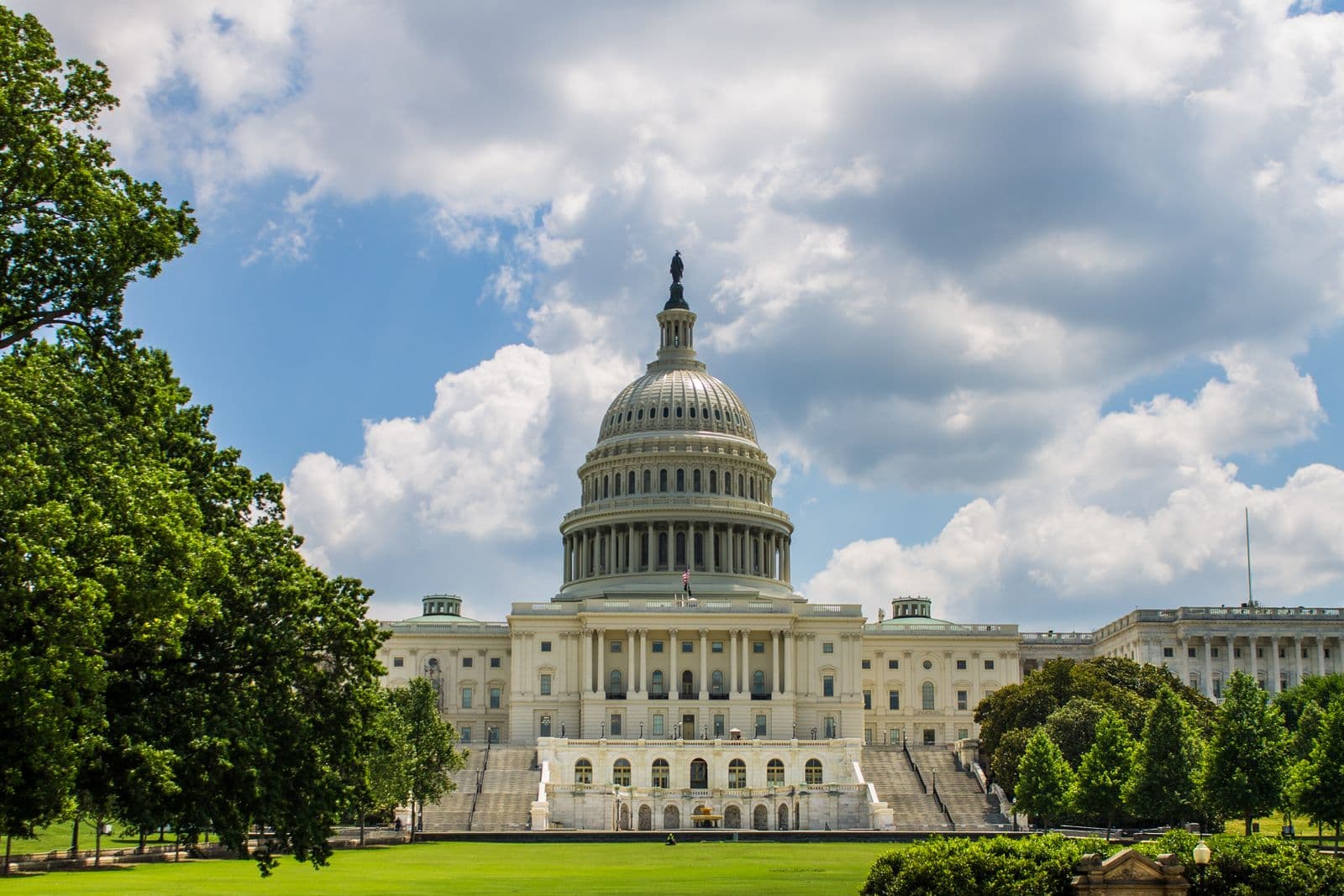
On 8 October 2026 the Wall Street Journal reported that President Trump, Vice President JD Vance and senior figures campaigning for the midterms had endorsed the Credit Card Competition Act, and that lobbyists for merchants had held talks with White House officials about attaching it to another bill after the November elections and before the current Congress ends in January. It is not the first time. Trump endorsed the bill when it was reintroduced on 13 January 2026, and again in an August post backing its Senate sponsor's re-election. It has never had a floor vote.
Swipe fees are one of the largest costs a card-accepting business has, and the bill is regularly described as the fix for them. It is narrower than that. This article sets out what the text requires, what it leaves alone, how long any change would take, and which merchants would actually see a saving. Status and figures are as of 9 October 2026.
There are two identical bills. S. 3623 was introduced by Senator Roger Marshall, a Kansas Republican, with Dick Durbin of Illinois and Peter Welch of Vermont, both Democrats, as original cosponsors; Bernie Moreno, Cynthia Lummis and Angus King joined in August, for five cosponsors in all. H.R. 7035 was introduced in the House by Lance Gooden of Texas with Zoe Lofgren of California, and has eight cosponsors. The congressional status records show one action on each: referral to committee on the day of introduction, Senate Banking for one and House Financial Services for the other.
The sponsors' strategy has been to attach the bill to legislation that is moving anyway, and it has not worked yet. An attempt to add it to the GENIUS Act stablecoin law in 2025 failed, and in March 2026 the Senate passed a housing bill without the amendment, which Durbin's office acknowledged the same day. The new reporting describes the same plan: find a vehicle in the weeks after the 3 November election. The payments industry, according to the Journal, considers passage unlikely. Visa and Mastercard shares each rose 0.8% on the day the story ran.
The text amends the section of the Electronic Fund Transfer Act that already holds the Durbin Amendment for debit cards, and gives the Federal Reserve a year from enactment to write rules with three effects.
The rules take effect 180 days after the Fed finalises them. So even if the bill passed in December, nothing would change at a checkout until about eighteen months later, in mid-2028, and later still if the Fed took longer or a court intervened. The bill also has the Fed, with the Treasury, publish a list of networks that pose a national-security risk or are owned by a foreign state, which could not serve as the second network, and it bars the Consumer Financial Protection Bureau from enforcing the new rules.
The three-party exemption was written when American Express and Discover were the only large networks that issued their own cards. Capital One completed its purchase of Discover on 18 May 2025, so one of the largest credit card issuers in the country now owns a network. The exemption turns on common ownership of issuer and network, and on our reading of the text a credit card Capital One issues on the Discover network would sit outside the routing rules. The bill does not address the case directly, and we found no statement from its sponsors on it. Capital One has already used the same three-party logic to take its debit cards outside the Durbin cap, which we covered in Capital One's move to Discover debit.
Merchants have had this right on debit cards since October 2011, and issuers have had to enable a second, unaffiliated network on every debit card since April 2012. Both come from Regulation II, the Fed's rule under the Durbin Amendment. For years it worked mainly in shops: a PIN debit network such as STAR or NYCE could take a card-present transaction, but many cards could not be routed that way online. In October 2022 the Fed made explicit that the requirement covers card-not-present transactions too, effective 1 July 2023. Our article on the debit interchange cap covers where that rule stands now.
The Fed's own figures show what the clarification did in its first months. In 2021, single-message networks, the PIN-debit family that competes with Visa and Mastercard, carried 6.1% of card-not-present debit transactions by number and 4.5% by value. In 2023, the year the rule took effect half-way through, they carried 6.6% and 5.0%. The Fed called the increase modest but clear. That is the latest year in the Fed's published interchange data that we found, and the lesson is not that routing failed but that it is slow: a merchant only benefits if its processor actually sends the transaction to the cheaper network, and only if a cheaper network is enabled on the card for that kind of payment.
Credit would start further back. Analyses of the bill name Discover and the PIN-debit networks, such as STAR, NYCE and Shazam, as the likeliest second networks, and the debit networks carry debit today, not credit. Opponents, led by the Electronic Payments Coalition of banks and networks, call the bill a mandate and argue that issuers would recoup lost interchange by cutting rewards programmes, which they say interchange largely pays for.
Suppose the bill passes and an alternative network does undercut Visa and Mastercard on credit. A change in interchange reaches a business only if its price is built on interchange, and that is true of debit routing today.
Flat-rate merchants would not see it directly. Square charges 2.6% + 15 cents for a tapped or dipped card on its free plan whatever the card costs it, Stripe's standard online rate is 2.9% + 30 cents, and Shopify Payments starts at the same on its Basic plan. A cheaper route would widen those processors' margin unless competition pushed their headline rates down, and nothing in the bill requires that.
Interchange-plus and subscription merchants would see it on the statement. Helcim prices in-person cards at interchange plus 0.40% and 8 cents at its lowest volume tier, and Payment Depot passes interchange through with no percentage markup, adding 8 cents a transaction in person and 15 cents online on top of a subscription. Adyen quotes US Visa and Mastercard transactions at interchange plus 0.60% and 13 cents. On those structures a lower interchange is a lower bill the same month, provided the processor routes to the cheaper network, which is worth asking about in writing.
If you cannot tell which kind of pricing you are on, the statement will tell you: our guide on how to read a merchant processing statement shows where interchange appears as its own line and where it is folded into a single rate.
Both sides quote large figures, and they are advocacy figures. The Merchants Payments Coalition, which backs the bill, estimates it would save $17 billion a year and puts total swipe fees last year at $198 billion. Durbin's office says Visa and Mastercard control about 85% of the credit card market; Payments Dive, citing the Nilson Report, has given 77%. The coalition opposing the bill has not published a cost estimate of its own that we could find, and argues instead about rewards and security. None of these numbers comes from the Fed, which does not regulate credit card interchange and publishes no credit equivalent of its debit interchange data.