Payment Processing · Buyer guide
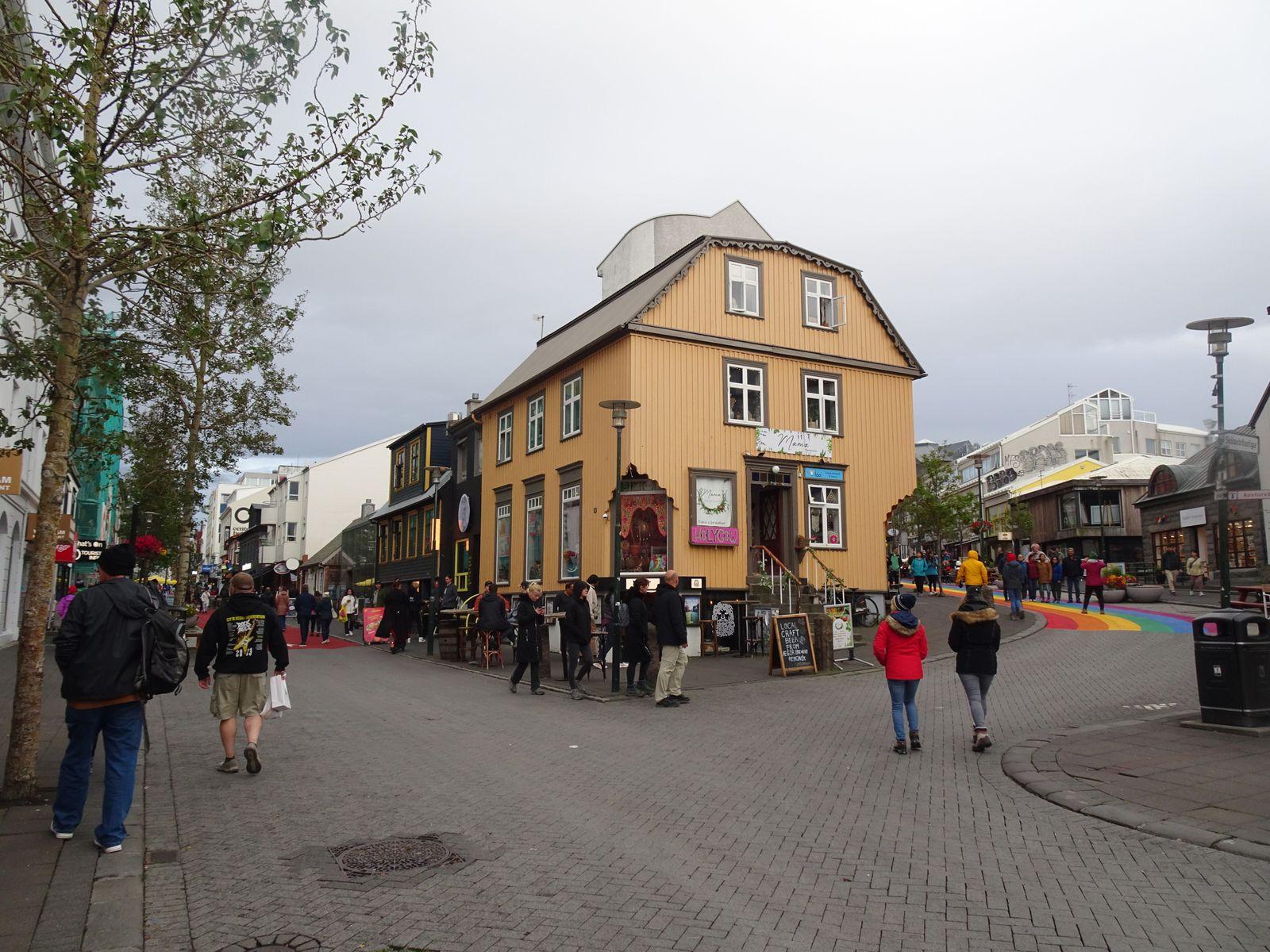
Iceland is one of the most card-dependent economies in Europe, and one where acquirers publish little about what card acceptance costs. The Central Bank of Iceland estimated in 2023 that more than 90% of domestic retail payments were made by card on foreign-owned infrastructure, and it has called that dependence a threat to national security. Its January 2025 report on the cost of payments put the total cost to society at about ISK 54 billion in 2023, or 1.25% of GDP, of which merchants paid acquirers about ISK 17.5 billion.
What a merchant pays for its share is mostly set in private. None of Iceland's domestic acquirers, Teya, Rapyd, Straumur, Landsbankinn or Íslandsbanki, publishes the percentage it charges per card payment: each asks you to request a quote. What they do publish is everything around it, terminal rent, per-transaction and settlement fees, and in one case the interchange and scheme fees underneath. Below is what we found on their Icelandic price lists, read on 17 November 2026, and what the international providers that serve Iceland publish. Iceland charges VAT at 24%; prices are shown before VAT unless we say otherwise.
Straumur is the only domestic acquirer that publishes a per-card breakdown of what goes underneath its rate. On its worked example of an ISK 7,500 payment in person, interchange and scheme fees together come to 0.27% on a domestic consumer debit card, 0.38% on a domestic consumer credit card, 0.31% and 0.41% on consumer cards from elsewhere in Europe, and about 1.01% and 1.12% on consumer cards from outside Europe. Domestic commercial cards cost about 1.35% to 1.44%, and commercial cards from outside Europe about 2.8%. Online with 3-D Secure, consumer cards from outside Europe rise to 2.39% on debit and 2.74% on credit. Straumur's own margin comes on top of all of these, and it notes the figures vary with the card and the amount.
That is why a single blended rate is worth checking against your card mix. By our sums of the Central Bank's monthly payment statistics, foreign cards made up about 23% of card spending at Icelandic outlets in 2025, and a blended rate has to cover their far higher underlying cost. A shop whose customers are mostly Icelanders paying by debit card may be paying for tourists' cards under a blended price; a hotel or tour operator whose takings are mostly foreign cards may be the one getting the bargain. Ask for interchange-plus-plus pricing as well, which Landsbankinn's price list offers, Íslandsbanki's FAQ describes and Rapyd's base online price list uses, and compare the two on your own last three months of transactions.
Stripe does not list Iceland among its supported countries, and we found no Icelandic site or prices for SumUp or Viva.com.
Take a café with 480 card payments a month of ISK 2,500 each: ISK 1,200,000 of takings, all on Icelandic consumer cards. At myPOS that costs ISK 23,880 a month (1.69% plus ISK 7.50 a payment), with no rent once the terminal is bought. myPOS pays into a myPOS account, and each transfer out to a bank account in krónur costs ISK 720. The domestic acquirers' published fixed costs, before their percentage, come to about ISK 6,200 a month at Teya (terminal rent only), about ISK 9,170 at Straumur (rent, ISK 6 a payment and one ISK 390 settlement fee; more if the fee is charged on each payout) and about ISK 9,930 at Rapyd (rent, ISK 6 a payment, settlement and its ISK 199 service web).
So the percentage in a Teya quote would have to be below about 1.47% to beat myPOS for this café, below about 1.23% at Straumur and below about 1.16% at Rapyd. With interchange and scheme fees on domestic consumer cards between 0.27% and 0.38%, there is room for a domestic quote to come in under those figures, but only the quote will tell you. The comparison tips further the more foreign cards you take, since myPOS charges 2.89% + ISK 7.50 on cards from outside the EEA and Rapyd adds 0.35% to every foreign card.
Article 62(5) of Iceland's Act on Payment Services, No. 114/2021, in force since 1 November 2021, says a payee may not charge the payer for using a particular payment instrument over others. The text is not limited to the consumer cards covered by the interchange caps, so it goes further than the EU minimum and further than Norway, which bans surcharges only on capped cards. You may offer a discount for a particular method, and the payer must be told about it before paying.
Act No. 31/2019 gave the EU Interchange Fee Regulation force of law in Iceland from 1 September 2019, capping interchange at 0.2% of a consumer debit card payment and 0.3% of a consumer credit card payment. The caps do not cover commercial cards or cards issued outside the EEA. Straumur's table shows interchange on domestic commercial cards of 1.28% to 1.36% in person. On consumer cards from outside Europe, interchange stays at 0.20% to 0.30% in person; the cost there comes mostly from scheme fees of about 0.8%. Online, interchange on those cards rises to 1.15% on debit and 1.50% on credit. The Act also asked the minister to assess, within two years, whether to set a lower domestic debit cap; we found no published outcome.
We found no general duty in Iceland to accept either cards or cash, and no cash payment limit. A business that takes €10,000 or more in cash, in one payment or linked payments, becomes subject to the anti-money-laundering Act No. 140/2018 and must carry out customer due diligence. In June 2025 the Central Bank's governor told parliament the bank lacked clear power to require cash acceptance generally, though he said it could set rules requiring sellers of essentials such as grocers and pharmacies to take cash, Morgunblaðið reported. We found no such rule adopted.
The Central Bank is building its way out of card dependence instead. In October 2026 its deputy governor said it was finalising the procurement of infrastructure that would make it simpler for private firms to offer payment for goods and services by account-to-account transfer, a request-to-pay scheme on the Bank's instant-payment system. No launch date has been announced. Separately, the Bank and the ECB agreed in June 2026 that instant króna payments will settle in the Eurosystem's TIPS platform, with the Bank aiming to be ready in the second half of 2028. And in June 2026 the Bank announced that from July, during an internet outage, chip-and-PIN card payments of up to ISK 50,000 per card could go through on Icelandic-issued cards, for food, fuel or medicine (issuers may allow more), though it said rollout may take time.
For other Nordic markets, see our guides to card and Vipps fees in Norway and card and MobilePay fees in Denmark.