Payment Technology · Buyer guide
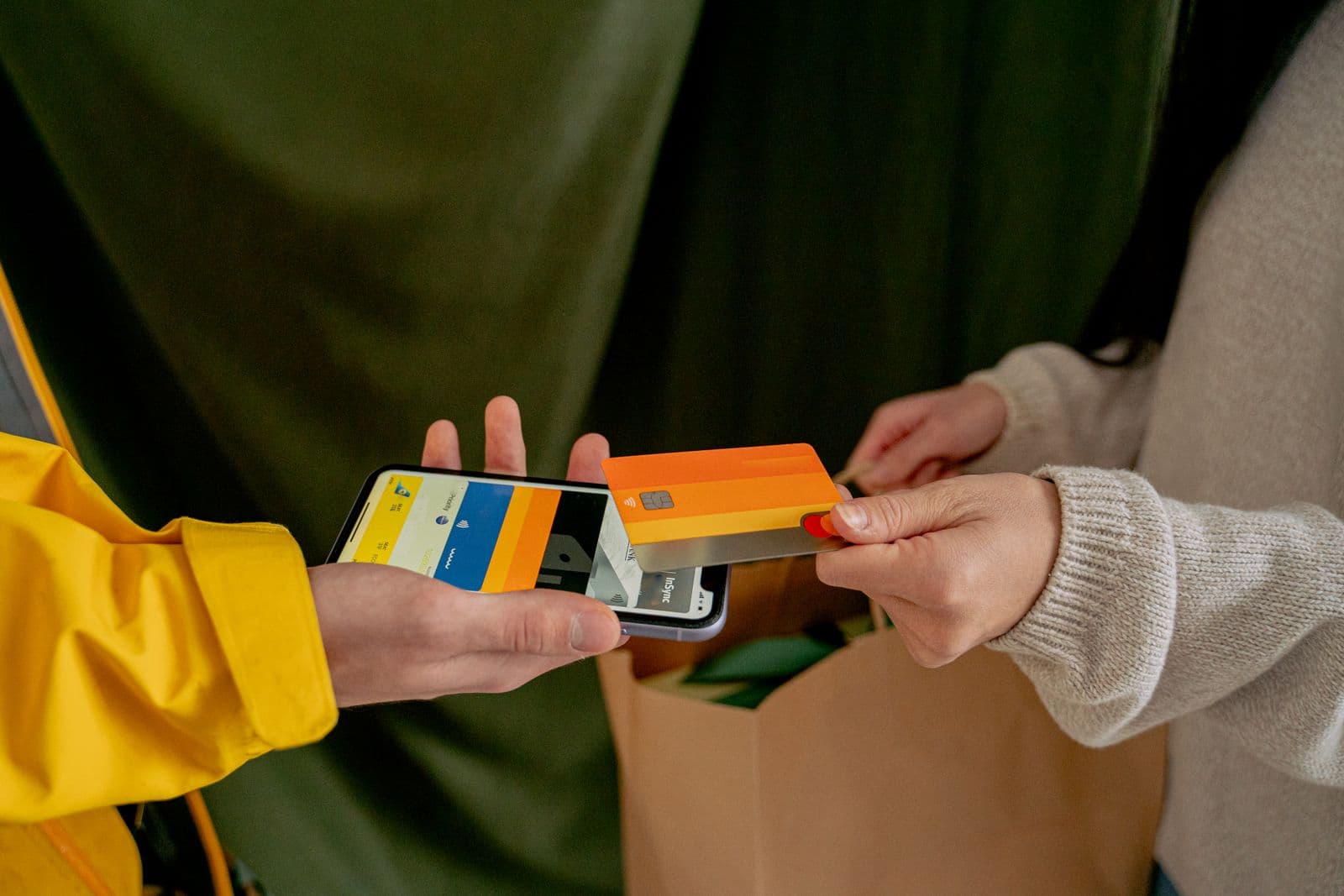
Apple's page of Tap to Pay on iPhone platforms lists 29 names for the United States, and most of the processors this site reviews are among them: Square, Stripe, PayPal, Helcim, GoDaddy, Chase, Clover, Adyen, Elavon, Worldpay, Fiserv, North, NMI, Finix, Fortis, Moov, Verifone and SwipeSimple. The promise is the same everywhere — no reader, the customer taps a card or a phone to the back of yours — and the question a business owner asks is the same too: what does it cost, and is it priced like a reader or like keying a card in? We read each processor's pricing and help pages on 17 September 2026 to find out.
The short version: at Square, Shopify, PayPal, GoDaddy, Chase and Clover, a tap on the phone is priced identically to a tap on a reader. At Stripe and Helcim it is the reader rate plus 10 cents an authorisation. At every one of them it is cheaper than typing the card number into the same phone, by about a point and in some cases more.
Percentages and cents hide the order, so here is a $40 sale, roughly a restaurant lunch for two or a market-stall purchase, on each published Tap to Pay rate:
Helcim depends on the card. On a basic Visa consumer credit card, Visa's April 2026 table gives interchange of 1.51% + 10¢, or 70 cents on $40; Helcim's first-tier margin of 0.40% + 8¢ adds 24 cents and Tap to Pay adds 10, so $1.04 before Visa's assessment fees. On an exempt debit card at 0.80% + 15¢ the interchange is 47 cents and the total is 81 cents. Helcim is cheaper than every flat rate above on debit and most credit cards, and dearer on premium rewards cards — which is the usual interchange-plus trade, and the reason our piece on keyed rates found the same processor at the bottom of the table for stored cards.
Set the same $40 sale against what the same phone charges to key the number in: $1.55 at Square (3.5% + 15¢), $1.49 at PayPal (3.49% + 9¢), $1.66 at Stripe (3.4% + 30¢), $1.50 at Shopify Basic and Chase (3.5% + 10¢), $1.40 at GoDaddy (3.5% + 0¢). Tap to Pay saves between 36 and 48 cents on the sale, or 0.9 to 1.2 points. A business taking $5,000 a month over the phone by card number saves $45 to $60 a month by asking the customer to tap instead, and that is before the counterfeit-fraud liability, which sits with the issuer on a tapped chip transaction and with you on a keyed one.
A tap on a phone is a contactless EMV transaction. The phone's NFC antenna talks to the chip in the card, or to the token in Apple Pay or Google Pay, and the issuer gets the cryptogram that proves the card was physically present. That is exactly what a terminal does, so Visa and Mastercard price it at their card-present rates and the fraud liability sits with the issuer. Visa's US interchange table effective 18 April 2026 puts a basic consumer credit card at 1.51% + 10¢ card-present against 1.89% + 10¢ card-not-present, and an exempt debit card at 0.80% + 15¢ against 1.65% + 15¢ under 'CPS/Retail Key Entry'. The gap between tapping and keying that every flat-rate processor passes on is, at wholesale, real.
It follows that a processor which charges more for Tap to Pay than for a reader is not passing on a network cost. Stripe's and Helcim's 10 cents are their own — the cost of the software integration, Apple's terms, and whatever Apple and Google charge the platform, which neither company publishes. Ten cents is small on a $40 sale and material on a $5 one: at a coffee counter, Stripe's Tap to Pay is 2.7% + 15¢ all in, or 28.5 cents on $5, against Square's 2.6% + 15¢ at 28 cents and PayPal's 2.29% + 9¢ at 20 cents. If your average ticket is under $10, the cents matter more than the percentage, and PayPal's 9 cents and GoDaddy's zero are the numbers to look at.
Apple's list names the payment platform or SDK provider. An app built on Stripe's Terminal SDK or Adyen's appears under Stripe or Adyen, not under its own name, so the absence of a brand is not proof it lacks the feature. Shopify is the clearest case: not on Apple's US list, but its help centre documents Tap to Pay on iPhone for Shopify POS in the United States, Canada, the UK, Australia, New Zealand and eleven European countries.
SumUp is the opposite case. It appears on Apple's United Kingdom list and not the United States one, and its US tap-to-pay web address redirected to its US homepage when we opened it on 17 September 2026 — a page that advertises the reader at 2.6% + 10¢ and says nothing about tapping a phone. If you are in the US and chose SumUp for a phone-only setup, you will be buying the reader.
Lightspeed is not on Apple's US list under its own name either, but its support documentation covers Tap to Pay on iPhone with Lightspeed Payments across its Restaurant and Retail apps — the O-Series restaurant app asks for an iPhone XS or later on iOS 18.4 and an active Lightspeed Payments account. Toast is the one large point of sale where we found no Tap to Pay on iPhone product at all: its support pages point to the Toast Tap contactless reader and the Toast Go handheld, both of which it sells. If a phone-only point of sale matters to you, that is a question to put to it before signing.
For a business that takes cards away from a counter — a plumber, a market stall, a food truck, a delivery driver — Tap to Pay on a phone is the cheapest way to accept a card that the networks recognise as present, and at most processors it costs exactly what a reader does without the reader. Among the flat rates, PayPal's 2.29% + 9¢ is the lowest published Tap to Pay rate we found, followed by GoDaddy's 2.5% + 0¢, which wins on small tickets. Square charges more per transaction and is the more complete point of sale; Stripe charges 10 cents more than its reader and is the right answer only if the rest of your business already runs on it. If your monthly volume is into five figures, Helcim's interchange-plus with the 10 cents added still beats every flat rate on debit cards. And whichever you pick, stop keying cards into the phone: the same device, with the customer's card tapped to the back of it, costs about a point less.